Ping Yu: Hello everyone, welcome to the Blooms and Beyond podcast, a podcast that uncovers plant health,
Download transcript (.srt)
0:06
0:11
0:15
0:16
0:18
0:20
0:27
0:31
0:38
0:42
0:45
0:49
0:52
0:55
0:59
0:59
1:03
1:07
1:12
1:16
1:20
1:26
1:31
1:32
1:35
1:42
1:45
1:49
1:52
1:57
1:58
2:01
2:06
2:11
2:14
2:14
2:18
2:22
2:25
2:30
2:33
2:39
2:46
2:59
3:04
3:09
3:15
3:18
3:25
3:31
3:34
3:40
3:48
3:57
4:03
4:21
4:27
4:34
4:39
4:45
4:48
4:54
4:59
5:06
5:14
5:16
5:24
5:28
5:31
5:37
5:40
5:46
5:49
5:53
5:55
5:57
5:59
6:07
6:13
6:18
6:21
6:25
6:30
6:33
6:38
6:44
7:00
7:02
7:13
7:16
7:20
7:21
7:26
7:28
7:32
7:35
7:37
7:45
7:50
7:52
7:57
8:03
8:10
8:12
8:29
8:36
8:38
8:43
8:47
8:55
8:58
9:06
9:14
9:22
9:25
9:31
9:33
9:37
9:39
9:40
9:44
9:46
9:51
9:52
9:57
10:02
10:04
10:09
10:16
10:17
10:23
10:27
10:34
10:39
10:56
11:00
11:06
11:13
11:18
11:21
11:30
11:45
11:46
11:53
12:00
12:05
12:10
12:12
12:15
12:20
12:22
12:25
12:29
12:31
12:33
12:40
12:46
12:54
13:15
13:21
13:24
13:29
13:31
13:34
13:39
13:43
13:46
13:48
13:52
13:55
13:56
14:01
14:04
14:08
14:13
14:17
14:19
14:21
14:23
14:24
14:27
14:30
14:45
14:50
14:53
15:00
15:06
15:12
15:14
15:17
15:22
15:26
15:31
15:34
15:39
15:45
15:51
15:57
16:01
16:11
16:18
16:23
16:26
16:34
16:40
16:50
16:57
17:03
17:10
17:15
17:21
17:27
17:33
17:42
17:50
17:55
17:57
18:00
18:06
18:10
18:13
18:21
18:27
18:35
18:37
18:41
18:44
18:53
19:01
19:07
19:12
19:15
19:20
19:25
19:30
19:37
19:43
19:46
19:55
20:00
20:06
20:13
20:20
20:22
20:27
20:30
20:32
20:36
20:41
20:45
20:49
20:56
21:05
21:11
21:12
21:16
21:21
21:27
21:32
21:36
21:40
21:49
21:51
21:58
22:02
22:03
22:06
22:11
22:17
22:20
22:34
22:35
22:40
22:58
23:03
23:12
23:18
23:21
23:26
23:33
23:40
23:44
23:47
23:54
23:56
24:02
24:07
24:11
24:17
24:21
24:25
24:29
24:34
24:44
24:51
24:56
24:59
25:07
25:10
25:11
25:15
25:22
25:27
25:32
25:41
25:42
25:44
25:48
25:51
25:59
26:03
26:06
26:35
26:41
26:49
Ping Yu: history, culture, and management through the lens of science.
Ping Yu: I'm your host, Ping.
Ping Yu: How's everyone doing today?
Ping Yu: I am doing great because one, it's Friday,
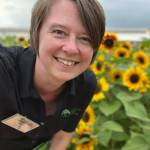
Ping Yu: and two, I have my dear friend Laura Barth from American Floral Endowment here with me
Ping Yu: to share her insight on the floriculture industry within the US and beyond.
Ping Yu: And she's probably going to also give us some introduction to the organization itself
Ping Yu: and some fun projects that they are doing within the industry.
Ping Yu: So without further ado, here is my conversation with Laura Barth.
Ping Yu: I hope you enjoy it.
Ping Yu: Hi Laura, welcome to the podcast.
Ping Yu: But first of all, let's start with the self-introduction.
Ping Yu: Can you tell us a little bit about who you are and what you do?
Laura Barth: Sure.
Laura Barth: I'm Laura Barth and I'm the research coordinator for the American Floral Endowment, where I
Laura Barth: help facilitate all of AFE's research programs and outreach.
Laura Barth: Happy to be here with you today, and AFE is pleased to be able to support five episodes
Laura Barth: in the first season of this podcast through one of our educational grants.
Ping Yu: Thank you, Laura, and thank you, AFE, for supporting the show.
Ping Yu: The AFE education grant is the initiation of the show, and I cannot wait to see how our
Ping Yu: collaboration with the show can grow and how we can bring more impact to our industry through
Ping Yu: this show.
Ping Yu: So, Laura...
Ping Yu: I know you for a couple years already and you used to wear a lot of hats, but all of
Ping Yu: them have something to do with horticulture.
Ping Yu: So did you grow up with horticulture?
Ping Yu: What first sparked you into the industry in general?
Ping Yu: Can you give us a little bit about your horticulture journey in that regard?
Laura Barth: Sure.
Laura Barth: So I have always loved plants and nature.
Laura Barth: I didn't garden a lot as a kid, but I was always going out hiking with my mom
Laura Barth: or doing other outdoor activities. So, I think a lot of people who know me or in
Laura Barth: the industry might already know this, but my first degree is in music
Laura Barth: performance.
Laura Barth: I graduated, I was kind of looking for some jobs in that, but at the same time
Laura Barth: I moved to North Carolina. Coming from Wisconsin,
Laura Barth: going to North Carolina was kind of a big change.
Laura Barth: There were so many more plants and flowers and everything was just beautiful and blooming.
Laura Barth: And all I wanted to do was be outside and all I wanted to do was garden.
Laura Barth: As I was kind of thinking about whether I wanted to go to grad school for music,
Laura Barth: I realized, you know, I'm trying to write this essay about why I want to do this, and I'm like, "You know what? I really just kind of want to be outside."
Laura Barth: Hmm, maybe that's my answer. So I started looking around, the types of jobs you get working with plants, and this sounds kind of funny now, but I realized that you could actually go to school for horticulture. I didn't really know
Laura Barth: that horticulture was a thing and I was in Chapel Hill, North Carolina at the time and
Laura Barth: lo and behold there was a great horticulture program at North Carolina State University.
Laura Barth: So I decided to go back to school and I got another degree and a graduate degree in horticulture science.
Laura Barth: So that's kind of how I ended up here in a nutshell.
Ping Yu: Wow, see I have heard a lot of stories with people from different backgrounds and with
Ping Yu: the art and music, it definitely, because I know you do a lot of work sideways with the
Ping Yu: photography and then art related.
Ping Yu: So I didn't know that you actually have a degree with music, that's really cool.
Ping Yu: So, this is going to be a little bit interesting, but with your background from music and art
Ping Yu: and horticulture, do you find anything related or do you kind of entangle those two backgrounds
Ping Yu: sometime at your work or some other project or just a thought in your daily basis?
Laura Barth: That is such a good question. And yes, maybe not music directly always, but I absolutely think there is a connection between art and horticulture. And especially in floriculture, when you're seeing floral designers and some of the landscaping, I think there really is a connection.
Laura Barth: Creativity to a lot of our industry that ties back into some of my background and it's also
Laura Barth: what made horticulture exciting for me. And also in my own work too, when we're putting out
Laura Barth: outreach materials or communications, there's a creative aspect in that too. So I think
Laura Barth: not only in the floral displays themselves, but also just creating resources for people,
Laura Barth: I think there can be an artistic side to that too.
Ping Yu: Yeah, I kind of like the link between the art and horticulture, especially in floriculture
Ping Yu: because that's a different, that's art in and of itself.
Ping Yu: And for the art part, there's a lot of famous paintings that are ornamental plant-based,
Ping Yu: like the sunflowers, the iris, the water lily, and the pear blossom, and all that are basically
Ping Yu: ornamental plants.
Ping Yu: I would say it's part of the green industry because when we talk about the green industry, we meant ornamental plants in general.
Ping Yu: And we have ornamental trees, ornamental shrubs, ornamental grasses.
Ping Yu: And then we also have the floriculture,
Ping Yu: which would be another big component to the whole picture.
Ping Yu: So can you tell us what is AFE
Ping Yu: and what are the things that you guys doing with AFE?
Laura Barth: So AFE stands for the American Floral Endowment
Laura Barth: and we're a 501(c)(3) nonprofit that funds research,
Laura Barth: internships, scholarships,
Laura Barth: and educational programs for the industry.
Laura Barth: One of the exciting things
Laura Barth: about AFE, especially since I was a scholarship recipient for AFE, is now that I'm on board as a
Laura Barth: staff member, I just see how wide our reach is and how many people in the industry have been
Laura Barth: touched by one of our programs. Beyond scholarship recipients and internship recipients and research
Laura Barth: grant recipients, also people who...
Laura Barth: review our scholarships, people who review our research. So we do a lot to
Laura Barth: help the industry and the best thing about AFE is that it is an endowment so
Laura Barth: the money isn't going anywhere. We're supported by the industry through
Laura Barth: industry funds and everything we put out goes directly back to the industry for
Laura Barth: free. So it's a really great way for the industry to kind of invest in itself.
Ping Yu: Yeah, and if you guys, well, I guess you already heard the episode from the pilot one, this whole episode was based on the AFE educational grant, and that's my initiation of actually starting this project.
Ping Yu: So, thank you, AFE.
Ping Yu: And I was one of the AFE scholarship recipients myself back when I was in grad school, so I agree with you, AFE does have...
Ping Yu: a big impact to the next generation.
Ping Yu: So can you tell us a little bit about
Ping Yu: the floriculture industry?
Ping Yu: What is the status of the floriculture industry in the US?
Laura Barth: You know, I think we have a strong industry.
Laura Barth: The floriculture industry encompasses cut flower production,
Laura Barth: whether it's field, greenhouse, hoop house.
Laura Barth: It also encompasses greenhouse production.
Laura Barth: And within greenhouse production, you know, you could be producing young plants, finished plants, really all stages of growth.
Laura Barth: And there's also perennials, bulbs, foliage, and succulents.
Laura Barth: And I think our industry is strong.
Laura Barth: One neat thing that we're seeing was a lot of interest in smaller plants,
Laura Barth: locally grown cut flowers. We're seeing more people interested in starting producing specialty
Laura Barth: cut flowers or even adding it as a cut-your-own flowers aspect to their garden center or to their
Laura Barth: whatever business they might have.
Ping Yu: Yeah, I have the same observation here in Georgia because for the past couple years, I have been asked by many growers, they were asking, hey, I'd like to start my own little farm and I want to grow cut flowers.
Ping Yu: And there are more and more of those little tiny farms where they put the u-pick farm for cut flowers.
Ping Yu: So I think it's really neat.
Ping Yu: Georgia used to be a big player in floriculture production,
Ping Yu: but back in the days, I think in 2008, 2009,
Ping Yu: the economy was not good and then they kind of wiped out maybe 90% of our floral producers
Ping Yu: but they are gradually picking it up again
Ping Yu: and another thing that I want to mention that what are the things that can be categorizing the floriculture
Ping Yu: and I think there was one of the neat places we all went to for one of the board meetings that we had maybe two years ago
Ping Yu: I think it's called Floral Mart in Peachtree Corners in Georgia, Atlanta, owned by the Garcia family.
Ping Yu: They produce all those wedding materials.
Ping Yu: Those are artificial floral materials, but they are gorgeous.
Ping Yu: Yeah.
Ping Yu: I think that would also categorize into the industry, right?
Laura Barth: Yeah, thank you for bringing that up.
Laura Barth: Yeah, that's an important piece too.
Laura Barth: And that was actually a learning experience for me at that particular AFE board meeting
Laura Barth: because yeah, hard goods is what that's called.
Laura Barth: You know, the faux flowers, some of which I want to note are extremely high quality.
Laura Barth: Yeah.
Laura Barth: By how realistic some of them looked and felt, and then also the ribbons and the wire.
Laura Barth: And yeah, that was really eye-opening and really a neat experience and is absolutely
Laura Barth: a very important part of our industry.
Ping Yu: Yeah, because a lot of times when people are talking about floriculture, they normally
Ping Yu: only think about cut flowers, the flower bouquet that they can see in a flower shop or in a
Ping Yu: garden center.
Ping Yu: AFE has a lot of projects in terms of supporting research, floriculture,
Ping Yu: and generating the outreach materials for the industry.
Ping Yu: With your position with AFE, have you seen any of the challenges for the industry?
Ping Yu: What are the challenges that our industry is facing right now?
Laura Barth: So I think labor is always the challenge. That's not something necessarily that AFE can fund directly, but I do think there are potential labor solutions through our internships. And if we're talking research programs, automation and AI can help with labor issues as well.
Laura Barth: Thrips and botrytis, as well as other pest and disease pressures.
Laura Barth: We've been seeing a lot of mite issues lately, you know, spider mites, Lewis mites.
Laura Barth: One challenge for the industry overall right now is increased cost and inflation, which can
Laura Barth: impact getting people into gardening, which means fewer people are buying plants, which
Laura Barth: affects everybody's bottom line.
Laura Barth: Another one that's maybe not as obviously related to production, but just right now there's some uncertainty with federal funding for floriculture research.
Laura Barth: We may not see the effects of that right away, but maybe five, ten years down the line, we'll see some negative impacts of the floriculture research programs that haven't been funded due to some of the federal funding cuts to see the impact of some of that lost research.
Laura Barth: Yeah.
Ping Yu: And so I have talked to some of our next generations, my undergraduate students, I
Ping Yu: tend to know that many of our next generations are very interested in
Ping Yu: starting their own business or open their own little nursery specifically for
Ping Yu: houseplants, for little container plants, but they wanted to
Ping Yu: have an online shop.
Ping Yu: So have you heard anything of those?
Ping Yu: How has the rise of the e-commerce and social media
Ping Yu: changed the floral business?
Ping Yu: Because I know, at least from the houseplant perspective,
Ping Yu: a lot of those are coming from the social media
Ping Yu: push or motivation?
Laura Barth: Yeah, that's a really good question.
Laura Barth: And I think we are definitely seeing that with a lot of brick and mortar florists who are losing business due to
Laura Barth: e-commerce. I was in Miami and I kind of saw where the flowers were imported and it was
Laura Barth: really interesting because you could go in there and like in the warehouse you saw these arrangements being put together for e-commerce and
Laura Barth: and it was a larger part of that importing hub than it had been before. And so, you know, I think that is definitely something that's impacting some of our retail florists. And a lot of people do prefer to order online or maybe not have the human interaction part of it. So yeah, that's definitely something we're seeing too.
Ping Yu: Yeah, I think the online shop would be one of the trends moving forward.
Ping Yu: Another part is the sustainability.
Ping Yu: I know that a lot of people are talking about sustainability.
Ping Yu: It has become a major topic.
Ping Yu: How is our industry addressing it?
Ping Yu: And I know AFE has a Sustainabloom project
Ping Yu: to address those sustainability issues within the industry.
Ping Yu: Can you explain a little bit more?
Laura Barth: Yeah, sustainability is something that a lot of producers
Laura Barth: as well as a lot of retail shops as well as consumers,
Laura Barth: it's something that they're becoming more and more interested in
Laura Barth: as well as concerned about.
Laura Barth: I think especially young consumers are really doing research into...
Laura Barth: how the products are being made or grown or things like that.
Laura Barth: So in 2022, AFE launched Sustainabloom, like you said,
Laura Barth: and it is a resource hub where people from all segments
Laura Barth: of the industry can go and just find resources
Laura Barth: that can help them become more sustainable
Laura Barth: no matter where they are in their journey.
Laura Barth: We don't have some of the same regulations
Laura Barth: that they do in Europe,
Laura Barth: but it is something that's becoming important to consumers.
Laura Barth: It'll help people kind of stay ahead of that as well.
Laura Barth: So I think it's very important to our industry and I think we'll just be seeing more of it in the years to come, more efforts to become more sustainable and also I think become more transparent about what these companies or what these businesses are doing to enhance their sustainability efforts.
Ping Yu: Yeah, I think it's just different terminology sometimes.
Ping Yu: For sustainability, people are like, "Oh, what is sustainability?"
Ping Yu: In our industry, we're talking about incorporating more, for instance, biodegradable containers into the production cycle,
Ping Yu: or just reduce the leachate for chemicals, insecticides, fungicides.
Ping Yu: And also implementing more IPM practices to your production
Ping Yu: so that you don't have to spray and spray.
Ping Yu: All those little strategies or practices
Ping Yu: are considered as sustainability to our industry.
Ping Yu: Our industry is working hard to provide sustainable,
Ping Yu: also with high-quality products to the general public.
Ping Yu: And I know that people are willing to pay
Ping Yu: extra just so that they know that they are making a big difference to the
Ping Yu: society as a whole to encourage our producers to adapt sustainable practices
Ping Yu: into their production so it is always a team effort.
Ping Yu: Yep. So you have been working in the industry for a while. What is your
Laura Barth: favorite plant? Oh, that is such a good question
Laura Barth: and it changes all the time. I'm gonna say, at least for today, my answer is ranunculus.
Laura Barth: Okay. I just love it. I was in Colombia recently for ProFlora, and they had some beautiful
Laura Barth: new ranunculus varieties in their Outstanding Varieties competition, and I just love them.
Laura Barth: They look like a craft project. They look like somebody like
Laura Barth: sat down on a table and took rows of tissue paper and just kind of stuck it all together and just some of the colors I saw were really exciting.
Laura Barth: So that's my answer for today, but it's hard. I think I have a lot of favorites like you probably do too.
Ping Yu: Yeah, I mean, ranunculus, the plant itself has a very unique texture for the flower, for the petals. So I agree with you, but
Ping Yu: how do you decide if this one, ranunculus, is your favorite plant for today? Do you change it every day?
Laura Barth: You know, if I think about it, a lot of it is just mood. There's just so many pretty options and creative breeding.
Laura Barth: I think it goes back to the artistry because, you know, sometimes maybe my mood is totally different and it's summer and it's warm out and...
Laura Barth: You know, just sunflowers are making me really happy. Maybe that's my favorite flower that day.
Laura Barth: For me right now, my favorite is probably dependent on either something that's beautiful in like an arboretum
Laura Barth: or something pretty I see in a bouquet or something like that.
Ping Yu: Yeah, I like the reason behind it because I think that's one of the pieces of information that I want to get out there.
Ping Yu: For the plant, I call it plant power, and it can really influence your mood. If you don't feel well
Ping Yu: or if you feel upset, go out for a walk and then see all those plants outside. And if you have a
Ping Yu: garden, or even grocery store, go to the garden center and just looking at them, they just, look at
Ping Yu: them, they can make you feel
Ping Yu: happy again. And that's the plant power we're talking about.
Laura Barth: Yes. Oh, I love it so much. Just even if I don't buy anything, if I'm, you know, just at a flower
Laura Barth: stand and I see some pretty dahlias like earlier in the fall, just instantly, you know, you just
Laura Barth: feel, feel more at peace.
Ping Yu: And feel. Yeah, yeah, and recently our, where I live, we opened a Trader Joe's, you know, which
Ping Yu: at Trader Joe's the garden center where they have all those different flowers into different like
Ping Yu: those little tiny buckets, they just lined up and then that's my favorite section at Trader Joe's.
Ping Yu: Yeah, I love it.
Ping Yu: Yeah, so every time I go there, I was like, "Oh, yeah."
Ping Yu: And the price is not that expensive.
Ping Yu: So I normally would go grab one piece and then take them back home and then put them into the little vase that I have at home and then just enjoy for the rest of the week.
Ping Yu: I think it's more the flower or flowers is not just a plant and I think it's also a lifestyle.
Ping Yu: I remember the other day when I grabbed a little bouquet from Trader Joe's back home.
Ping Yu: I don't know for some reason, it just reminds me of a movie.
Ping Yu: that I saw. Oh gosh, what's it called?
Ping Yu: It's called The Lady of the Camellias. I think it's from a famous book by
Ping Yu: Alexandre Dumas. If you ever watched any of those European movies,
Ping Yu: especially those in the old days, you probably would notice that they have
Ping Yu: a local fresh market where you can buy all sorts of flower bouquets in those little buckets.
Ping Yu: A more recent one, I think you may get a feel of the lifestyle that I am referring to,
Ping Yu: is a TV show called "Emily in Paris".
Ping Yu: I mean, you just go to the fish market or the flower shop and grab one flower bouquet and then wander around the city,
Ping Yu: and then put the flowers into the vase when you get home and enjoy them for a week.
Ping Yu: I think it's just a lifestyle, you know, I mean I just love them.
Ping Yu: So there's definitely a lot of changes and challenges that we're facing right now, but
Ping Yu: how do you see the flower industry evolving in the next five to maybe ten years?
Laura Barth: I think we touched on one already.
Laura Barth: We're going to see an increase in sustainability efforts,
Laura Barth: whatever that looks like for an individual organization.
Laura Barth: Another exciting thing we're going to see a lot more of
Laura Barth: is the use of AI in all kinds of aspects of production.
Laura Barth: I'm seeing drones integrated with AI or machine learning technologies
Laura Barth: to detect diseases, detect nutrient status.
Laura Barth: Sometimes they're used to dispense biological
Laura Barth: controls into a field. And then also using AI for other aspects of production, like so whether
Laura Barth: it's automation or creating SOPs or tools, just a lot of AI, but also integration of AI into some
Laura Barth: of these other existing or developing technologies. And so I think that's, you know, even in the past
Laura Barth: year or two,
Laura Barth: I've seen a lot of developments with that and we're seeing more research proposal applications
Laura Barth: that deal with AI or machine learning or the integration of both of those aspects.
Laura Barth: So yeah, I think that's going to be a big one, that and sustainability.
Ping Yu: Yeah, I don't know what's going to happen down the road, but from the little small business
Ping Yu: side, I think when the next generation...
Ping Yu: get into the market and they become the owner of their own operation.
Ping Yu: I think we're probably going to see a little bit more of those online stores that'll be in business.
Laura Barth: Yeah, I agree. E-commerce is going to be big.
Laura Barth: We actually had a recent GrowPro and Melinda Knuth was one of the speakers and she was talking about how younger consumers,
Laura Barth: you know, will be purchasing things online more and how companies can prepare for that.
Laura Barth: So, yeah, I agree.
Laura Barth: And I think the types of crops in that type of situation might be different, too.
Laura Barth: It might not be somebody going to the garden center to get some bedding annuals to put in their yard.
Laura Barth: It might be things more like niche or more like cute little succulents in pots or houseplants.
Laura Barth: So it'll be interesting to see what that looks like.
Ping Yu: Yeah, well, if a young grower comes and asks you to give one piece of advice to help them set themselves up for long-term success, what would you say?
Laura Barth: That is a really good question.
Laura Barth: And I think there's, you know, a bunch of different directions that could go.
Laura Barth: I would say if they're a young grower and they're producing crops, I would say that there's a lot of good educational resources out there, whether it's, you know, of course, I'm going to say AFE because we have fantastic free resources, but also going to conferences.
Laura Barth: Talking with other growers, going on tours, seeing what they're doing, reaching out to your local
Laura Barth: extension office, you know, to see what resources they might have for various issues you're facing,
Laura Barth: making those connections with those people so you, you know, they can reach out to you or
Laura Barth: one of our researchers at AFE if they need help with something.
Laura Barth: I think, yeah, there's just a lot out there and you don't have to spend a ton of money to
Laura Barth: reinvent the wheel. And also I would say to our industry, it's surprisingly friendly and
Laura Barth: surprisingly open with how much knowledge we're willing to share. I feel like we don't see that in...
Laura Barth: Growers could go and ask their competitor, I feel like in some cases,
Laura Barth: production questions, they would be willing to help.
Laura Barth: So don't be afraid to reach out to other people to make connections and get resources.
Ping Yu: Yeah, I totally agree with you.
Ping Yu: With our industry in general, people are willing to share a lot of things.
Ping Yu: Even if you go ask your potential competitors about, hey,
Ping Yu: I have an issue here, where did you get your soil from? Who is your vendor?
Ping Yu: They're willing to tell you. I think that's the vibe that you don't get from other industries for sure.
Laura Barth: I was kind of surprised the very first tour I ever went on and I was like wow they just
Laura Barth: gave a lot of information away. That's surprising but really cool.
Ping Yu: I think that's the reason that our whole industry thrives.
Laura Barth: I agree. Yeah. I mean because if we're all eating, it's better for everybody.
Ping Yu: So, with that in mind, if people want to find more information, where do you suggest they go out and find more information and resources?
Laura Barth: So, you can start, if you're looking to get resources from AFE, we have research reports from our funded researchers.
Laura Barth: We have the GrowPro webinar series, which has a lot of information.
Laura Barth: You were a speaker on one of our GrowPros, so...
Laura Barth: You can basically go to endowment.org and then there will be a little drop box on the
Laura Barth: main page and it'll let you pick what your segment is and you can just click on that to
Laura Barth: get all your resources.
Laura Barth: Also, I always have to shout out Cooperative Extension.
Laura Barth: So many great resources through Cooperative Extension and those Extension agents can put you in contact with people.
Laura Barth: AFE is always happy to support Extension faculty through our various resources as well.
Laura Barth: So those are probably for floriculture, I would probably start there and then you can branch out.
Laura Barth: If you're listening to this and you have any questions, I'm always available through email or phone and I'm sure you are too, Ping, so.
Laura Barth: Yeah, we're here to help.
Laura Barth: Yeah.
Ping Yu: Well, thank you, Laura, for taking your time and talking with us today.
Ping Yu: I really appreciate the insights that you shared with us.
Ping Yu: AFE does provide all the resources to the researchers, to the general public, and to our
Ping Yu: industry and has a lot of wonderful resources that are free.
Ping Yu: So take advantage of that.
Ping Yu: Thank you, Laura.
Ping Yu: Give a review for the podcast. And as always, go check out the show notes to learn more about this
Ping Yu: topic and other topics we featured on the show at bandbpod.com. Thank you for listening. Till the
Ping Yu: next time, stay healthy and go plants!