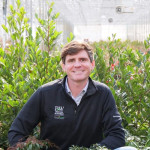
Ping Yu: Hello everyone, welcome to the Blooms and Beyond podcast, a podcast that uncovers plant history, culture, and management through the lens of science. I'm your host, Ping. Today I'm doing great because, again, I have one of my favorite people from Southern Region IPPS and my dear friend Judson LeCompte from Proven Winners. Judson has years of experience in horticulture and he knows both from academia and industry perspective, and of course has one of the dream jobs in the industry as an international plant hunter, and a lot of funny stories behind this over the years. I don't want to steal any more thunder from our speaker today. Let's just jump right into it. Without further ado, here is my conversation with Judson. I hope you enjoy it. Hey, Judson, welcome to the podcast. First of all, let's get started with the introduction.
Ping Yu: Can you tell our audience a little bit about who you are and what you do?
Judson LeCompte: Okay, yes, I'm Dr. Judson LeCompte.
Judson LeCompte: I work at Spring Meadow Nursery as a product development manager, which is basically a plant hunter.
Judson LeCompte: I work with all of our external breeders from around the world to bring their genetics into our catalog, into our program.
Judson LeCompte: And then share them around the world and let them beautify the world.
Judson LeCompte: And at Spring Meadow, we are the woody plant provider for Proven Winners.
Judson LeCompte: So Proven Winners Color Choice is the woody side.
Judson LeCompte: And so we do trees, shrubs, and vines.
Judson LeCompte: And we're based here in West Michigan.
Judson LeCompte: So if you can tell from my accent, I'm not from Michigan, originally from Alabama.
Judson LeCompte: But it's a lot of fun. It's currently sleeting outside right now.
Ping Yu: Oh my gosh. In that case, I have to correct myself a little bit because I said that you're from Proven Winners.
Ping Yu: For some reason, I feel like because you always wear Proven Winners brand.
Ping Yu: Socks and jacket and everything.
Judson LeCompte: We are part of Proven Winners.
Judson LeCompte: You know, we each have our own specialty.
Judson LeCompte: So you've got annual providers, you've got bulb providers, you've got us that do shrubs, Walters that does perennials.
Judson LeCompte: So we all have our expertise and we bring it all together and make some beautiful things.
Ping Yu: Oh, that's great. Okay. I am partly right in that regard. But I have known you for years. What first sparked your interest in horticulture in general? Are you a nature kid when you grew up or is this something that stumped you into this trajectory?
Judson LeCompte: Well, I think one thing is I've never grown up, which is a plus for me and my job.
Judson LeCompte: I'm a six-year-old everywhere I go.
Judson LeCompte: I have a lot of fun visiting my breeders and my friends.
Judson LeCompte: But I was introduced to horticulture by my grandmother.
Judson LeCompte: I think it's a similar story for a lot of people.
Judson LeCompte: She was a farmer and a daylily collector and hybridizer.
Judson LeCompte: And so I would walk her gardens with her and look at daylilies.
Judson LeCompte: And I became really interested in horticulture.
Judson LeCompte: And I bugged my parents so much that they let me volunteer at a nursery when I was 14.
Judson LeCompte: And I got paid in plants because you couldn't hire me.
Judson LeCompte: But that's where it all started.
Judson LeCompte: And I went to school at Auburn University for my bachelor's and master's.
Judson LeCompte: And just continued. I love learning, love finding new plants, and so moved to Mississippi and finished
Ping Yu: my PhD there. I know that you have a very deep root in the South, so I guess people can tell the accent. Your southern accent is still there, but I love that how you ended up moving from south to Michigan. But how did you start the role as an international plant hunter
Judson LeCompte: with your current job? So after my PhD, I actually, through IPPS, made a really great connection with Jim Berry. He had a large wholesale nursery in Texas and I interviewed for a job there with him, literally at an IPPS meeting.
Judson LeCompte: And I hadn't even defended my PhD and took a job with him.
Judson LeCompte: So I was doing product development with Jim for almost three years.
Judson LeCompte: And I went to the Southeastern Plant Symposium done by the Raulston Arboretum.
Judson LeCompte: And my former boss, Tim Wood, who was the former product development manager at Spring Meadow, was talking and...
Judson LeCompte: I saw him the next day in the breakfast line and I was like, "Man, your job sounds really cool.
Judson LeCompte: You just get to travel around and talk to people and find new plants." And he said, "Well, I'm getting ready to retire, so you should apply." And so that was in 2019 and I moved here in Michigan in 2020.
Ping Yu: Oh my gosh, that's interesting. I kept telling people, your job is the ideal or dream job in the industry in general, because you got to see all kinds of new plant materials and talk to people from all different places.
Ping Yu: And you get to travel a lot.
Judson LeCompte: I get to travel a lot.
Judson LeCompte: Me and you might think it's the ideal job, but a lot of people don't want to travel.
Judson LeCompte: They find it difficult to speak with people.
Judson LeCompte: They have a family.
Judson LeCompte: And so luckily I'm home almost every weekend.
Judson LeCompte: So I get to spend a lot of time with my family and make it a priority.
Ping Yu: Yeah, I think that you're right.
Ping Yu: And some people in our industry, they would be happy to talk to people that they know.
Ping Yu: If you ask them to jump out of their comfort zone, it can be intimidating sometimes.
Judson LeCompte: That's the biggest thing for me. In between my master's and my PhD, I spent a summer in Germany by myself. I didn't speak German. I was doing research for a German university. And you just become uncomfortable. And I'm sure you can...
Ping Yu: I can relate to you.
Judson LeCompte: Yeah. You stand out. You look different. You are different. And you can use your charm and your skills to...
Judson LeCompte: help you out and get what you need.
Judson LeCompte: I think being uncomfortable for certainly a young horticulturist is a great thing.
Ping Yu: Yeah, I totally agree.
Ping Yu: And I try to do it myself too.
Ping Yu: Try to step out of the comfort zone often enough so that I can learn new things.
Ping Yu: I just push myself a little bit to the edge.
Judson LeCompte: Yep, yep, yep.
Judson LeCompte: And listen, just be ridiculous and have fun and people will love you because of it.
Ping Yu: Yes.
Ping Yu: I know there's a lot of logistics.
Ping Yu: I would love to learn a little bit more about...
Ping Yu: international travel, especially if you're trying to collect the plant samples back and there's a lot of logistics and paperwork processes that you have to go through.
Ping Yu: Can you tell us a little bit about the preparation and if you're planning for a trip to, I don't know, Japan, what are some of the preparation work that you need to go through before you step into the field?
Judson LeCompte: So starting out, the job is a lot of looking for breeders, right?
Judson LeCompte: So using my network that I've built over the years to, I might find a breeder in Japan, but I don't know him.
Judson LeCompte: He doesn't know me.
Judson LeCompte: He doesn't speak English, but I have Japanese friends and Japanese colleagues that will go and talk to them or when I come to visit, will tour us around.
Judson LeCompte: So I pretty much have a partner in every country that I travel to.
Judson LeCompte: And so I'll fly out to visit them.
Judson LeCompte: It's so nice now that we have cell phones and Wi-Fi.
Judson LeCompte: And back in the day when Tim was doing this, he would have to write letters and hope that somebody just showed up to pick him up from the airport in Japan.
Ping Yu: Wow.
Judson LeCompte: So now, you know, I can text my...
Judson LeCompte: colleagues in the air.
Judson LeCompte: So when I land, everything's good.
Judson LeCompte: Then we tour around and look for nurseries and look for plants.
Judson LeCompte: So I make a list, a lot of pictures.
Judson LeCompte: And when I get back, you make priorities.
Judson LeCompte: So what's the most important thing to get first?
Judson LeCompte: And then you start getting into the regulations.
Judson LeCompte: The USDA has, and APHIS has very strict guidelines for what plants can be brought into the US and this is for good reason.
Judson LeCompte: We don't want to introduce a disease or a pest that could impact our food or our ornamental plants.
Judson LeCompte: So there is a great manual online called the Plants for Planting Manual and different websites through the USDA APHIS that you can filter where the plant comes from and what the plant is and tell you all the regulations that you have to have.
Judson LeCompte: And there's basically three main ones.
Judson LeCompte: There's plants that are just fine to bring in.
Judson LeCompte: You just need to have a phytosanitary certificate from that country.
Judson LeCompte: And an import permit.
Judson LeCompte: Then there is post-entry quarantine, which is a quarantine site on a nursery or university.
Judson LeCompte: This is kind of like your medium level of things.
Judson LeCompte: So this is hydrangeas and roses.
Judson LeCompte: Most of those have to stay two years in that post-entry quarantine.
Judson LeCompte: It gets inspected multiple times a year.
Judson LeCompte: And those are a little difficult.
Judson LeCompte: The most difficult are the controlled import permits.
Judson LeCompte: So this requires you to have a quarantine facility where you collect all runoff water.
Judson LeCompte: It has to be threat screened.
Judson LeCompte: It gets inspected monthly.
Judson LeCompte: All the water has to be treated before it's disposed of.
Judson LeCompte: It takes a lot of investment to build those quarantine facilities.
Judson LeCompte: And so if a nursery doesn't have those capabilities on site, the USDA does provide that program.
Judson LeCompte: It's just a little because you're not there able to watch them and check on everything.
Judson LeCompte: So once we figure out what the permit is, we contact our breeder.
Judson LeCompte: And a lot of times it's just teaching them how to ship the plants, because shipping plants is a lot easier than people make it out to be.
Judson LeCompte: But we have to follow the steps.
Judson LeCompte: Generally, we import plants through Atlanta.
Judson LeCompte: We have a broker there that will pick up our package from the airlines, take it through customs, get it inspected, and then they will forward it to us.
Judson LeCompte: And so then once it gets to us, it'll either go through a two-year quarantine or it'll go into trial.
Judson LeCompte: And most plants from an external breeder take five to ten years of evaluation before it's introduced.
Ping Yu: So there's a lot of logistics in the whole process just by listening to what you just described.
Ping Yu: But did you get...
Judson LeCompte: And that was very basic.
Ping Yu: I know.
Ping Yu: I was like, besides your personal network, do you get any assistance or partnership from the local botanics or governments or any institutions that you get to know?
Judson LeCompte: Yes.
Judson LeCompte: We do have an internal breeding team and we have breeding partners that we work with.
Judson LeCompte: And a lot of times when I'm traveling, they'll be looking for some germplasm, something for them to breed with either seed or a mother plant.
Judson LeCompte: And so we do a lot of trading.
Judson LeCompte: So if the botanic garden needs seed from a native that we have in the US, we'll collect it, send it to them.
Judson LeCompte: We definitely believe in the IPPS motto of seeking and sharing.
Judson LeCompte: And we think that by sharing with our partners, we raise all the tides.
Ping Yu: Yeah, now we're talking about another previous exchange program participant. Oh yes, yeah. So I went to the European exchange and
Judson LeCompte: and honestly I still have those contacts to this day and every one of those relationships that you meet is so valuable.
Ping Yu: Yeah, yeah, because I can't imagine if you don't have those connections throughout the year, how can you decide, hey, I'm going to South Korea tomorrow and I got one person who will come and pick me up and then just arrange all the things that we wanted to do in there for the next five days.
Judson LeCompte: You also have to return the favor, correct?
Judson LeCompte: So when our breeding partners come to visit, we show them everything.
Judson LeCompte: They get to see all of our R&D facilities, our beautiful trial gardens.
Judson LeCompte: And so, yeah, we try to return the favor as much as possible.
Ping Yu: Yeah, that's how you make the work.
Ping Yu: If you don't, then how can they help you out?
Ping Yu: I know that you have been to, I don't know how many times in Asia or how many times in Europe, but what factors go into deciding where to explore for the new genetic materials for your international plant hunting?
Judson LeCompte: So everything in our catalog, I think now we have over 300 and something items.
Judson LeCompte: Everything in the catalog needs to be replaced.
Judson LeCompte: There has to be an improvement.
Judson LeCompte: And so every plant can be improved.
Judson LeCompte: It was a good start when we found it, but we want to make it better.
Judson LeCompte: And there's no perfect plant.
Judson LeCompte: And so we have our priority lists, what we're lacking, what we need more of, what is selling well.
Judson LeCompte: And so then I'll look at who's breeding those things.
Judson LeCompte: I'll look at a lot of research papers, a lot of social media, and then you can even go down to, okay, where's this plant native to?
Judson LeCompte: So Weigela we're going to be looking in Japan, a lot of rhododendrons in China, you know, different things like that.
Judson LeCompte: And then there's certain countries that are just easier to deal with. Certain countries, it's just not worth it almost.
Judson LeCompte: It's just not worth it almost.
Ping Yu: Yeah, I totally get it.
Judson LeCompte: If you don't have a horticulture industry in that area.
Judson LeCompte: So like I've been hunting in Mexico before and Mexico does have some really amazing horticulture, but most of your local nurseries are not.
Judson LeCompte: They're selling the exact same thing.
Judson LeCompte: They're all passing the same plants to each other.
Judson LeCompte: And so there's not a huge amount of diversity within nursery crops.
Judson LeCompte: I'm not like some of the plant hunters that'll go climb mountains and get leeches and hike for three weeks.
Judson LeCompte: I'm looking for a breeder or a collector that has already done that hard work.
Ping Yu: Yeah, because I was wondering if you would go through the wild and looking for a plant that has not been cultivated in the nursery settings, because that would be the first step of new plants to be discovered.
Ping Yu: But that's a ton of work.
Judson LeCompte: It is. And we do look in the wild for seed and germplasm. We can get some of those wild genetics into an already inbred line. You can get some hybrid vigor. You can do a lot of different things that way. So just think about hydrangea or roses. We've been breeding with the same hydrangeas and same roses for so long where you've from an original population that was collected in China 200 years ago.
Judson LeCompte: And so there's still amazing genetics in the wild that have a trait that we want.
Judson LeCompte: And so we do a little bit of that.
Ping Yu: Yeah, because I grew up in China and I know how many new plants sitting in the mountains that looking for people to come and just discover them. But I think it'll take I don't know how many years for them to even get close to maybe 10% of those wonderful plants that can be cultivated and can be used in the nursery settings.
Ping Yu: But speaking of the traits, right now we are dealing with a lot of challenges, especially the climate resilience and people looking for plants that have resistance to certain diseases like drought tolerance and all that.
Ping Yu: What are the specific traits or characteristics that you guys are looking for in terms of your plant hunting and your breeding program?
Judson LeCompte: I think it's important to know exactly what the industry already is doing, what is already in the industry.
Judson LeCompte: When I was in undergrad at Auburn, I managed a Home Depot garden center.
Judson LeCompte: And I knew every single plant that I brought in.
Judson LeCompte: And so by learning all those plants and experiencing those plants and seeing what your competitors are doing, you know.
Judson LeCompte: where the good plants are and what those plants need to have improved on them.
Judson LeCompte: But basic characteristics we look for, consumer appeal, consumer performance.
Judson LeCompte: The industry as a whole internationally is going to smaller plants.
Judson LeCompte: It's for a few different factors.
Judson LeCompte: Generally, our gardens are getting smaller, but small plants also take up less footprint in the nursery.
Judson LeCompte: They take up less air on a truck.
Judson LeCompte: We need to have environmentally friendly.
Judson LeCompte: So this is going to be including with drought tolerance, disease resistance, insect resistance.
Judson LeCompte: So we can combine those to where, again, the consumer has to put in less inputs, just a hardier plant.
Judson LeCompte: And then newer unique uses.
Judson LeCompte: We really like foliage color.
Judson LeCompte: So we are Proven Winners Color Choice Flowering Shrubs.
Judson LeCompte: We do sell things that don't flower or that don't have a very noticeable flower.
Judson LeCompte: And a lot of shrubs flower for a short period of time.
Judson LeCompte: And so if we can play with foliage color, it changes throughout the year.
Judson LeCompte: That gives a lot of interest.
Judson LeCompte: And then you're also looking for plants that are looking good in spring and summer when people are shopping.
Judson LeCompte: It's very important.
Judson LeCompte: We always talk about fall color and I love fall color and I tout the plants that have fall color, but...
Judson LeCompte: In the fall, nobody's looking for anything other than a mum or a pumpkin.
Judson LeCompte: A lot of different characteristics.
Judson LeCompte: Edibles are big right now.
Judson LeCompte: And so we're looking for good tasting edibles.
Judson LeCompte: We don't want just a compact plant.
Judson LeCompte: It's got to taste good.
Judson LeCompte: And then ultimately, we want to have the best in class for every single plant that we offer.
Judson LeCompte: So if it's hydrangea, I want to have the best hydrangea.
Judson LeCompte: If it's roses, I want to have the best rose.
Ping Yu: I can tell in terms of the smaller plants, I think with the population growing quickly down the road, people would have compact apartments where they don't have a whole lot of backyard or front yard to put big plants out there so all they need to do is to grab those little tiny plants in their balcony or inside your house so that they can at least have some taste of the plants instead of going to the backyard and having the big plants growing out there they just don't have the space in general. Speaking of that, I know that you work with so many different breeders and every breeder I would say they have their own taste of breeding their own characteristic or their own plants. But are there any traits or characteristics of a plant that breeders commonly overlook but can be found in the wild relatives or that you think would be...
Ping Yu: more preferred by the consumers because in terms of breeding, especially the research perspective, people would like, oh, I like this. I can spend another five years to improve one specific characteristic. But at the end of the day, the consumer may not like that.
Ping Yu: So are there any thoughts or insights that you can share from that perspective?
Judson LeCompte: So right now we're working with over 75 external breeders. And so they range from backyard hobbyists, backyard collectors to super proficient university breeders like Tom Ranney from North Carolina State University.
Judson LeCompte: What I find a lot of times is you have people that have the idea, have the goal of one characteristic, but then they forget the rest of them.
Judson LeCompte: And so you're breeding for this one flower type, and you just keep breeding for that one flower type, but the plant looks terrible.
Judson LeCompte: And so the plant has to be marketable along with the flower.
Judson LeCompte: And then a lot of times...
Judson LeCompte: They're academics that don't know a lot about production.
Judson LeCompte: They know how to do the cross and they understand the science behind the cross, but they don't have the practical knowledge to know what's a good plant or be marketable.
Judson LeCompte: And a lot of it is just experience.
Judson LeCompte: And you may go into a person's backyard and the plant's overgrown or laying over and you have to be able to decide, OK, if this was in a normal production scheme, would this plant look right?
Judson LeCompte: And so there's a little bit of that.
Judson LeCompte: And then China's nice.
Judson LeCompte: I like China because for the faculty members to get a plant patent, that's what they need to get promoted.
Judson LeCompte: And so their goal is to get a plant patent.
Judson LeCompte: They don't care if they sell a single one.
Judson LeCompte: And so you've got really amazing breeders that are doing awesome science.
Judson LeCompte: And then I get to go in and be like, look at all this cool stuff that you've got that you didn't even know you had.
Judson LeCompte: And so that's a lot of fun for me.
Judson LeCompte: And it's fun seeing, I think, for the breeders to see me get excited about something that they've overlooked or haven't thought about.
Judson LeCompte: But it does take some delicate communication sometimes because this is...
Judson LeCompte: that breeder's life work.
Judson LeCompte: And it is a privilege to have a plant trial with Spring Meadow and Proven Winners, but you also have to be delicate with them because that is their hard work.
Ping Yu: Yeah, I guess you are the bridge to connect both academia with the breeder and industry.
Ping Yu: That's why your job, your staff is so unique in that regard.
Ping Yu: How can you bridge the gap between those two?
Ping Yu: And can you give us an example?
Judson LeCompte: Well, I'm not going to name any names, but I've had some young faculty that are new breeders have just come into a position.
Judson LeCompte: And because I've been on the university side, I know what they need to get promoted, right?
Judson LeCompte: So they've got to have short-, medium-, and long-term goals to do their package. And so I can help them with that, making sure that the priorities that they're working on will deliver that. And so hopefully it's not just to make them a better researcher, make them a better breeder, and then that way we can continue to get plants from them.
Judson LeCompte: So there's a lot of educating that way. But the biggest thing is to go to a garden center and get uncomfortable and talk to people and ask them why they have those plants in that basket.
Judson LeCompte: So go to whatever local grower and see the person pushing around a cart full of plants and ask them why they selected them.
Judson LeCompte: Look at what's on end caps.
Judson LeCompte: So the ends of aisles in a nursery, because to that garden center, that's cream of the crop.
Judson LeCompte: That's the prime, because that's where they want to sell the most.
Judson LeCompte: And so you look at the stuff that's on end caps.
Judson LeCompte: That's what gets people excited.
Judson LeCompte: And, you know, this is a lot of stuff that I learned at Home Depot.
Judson LeCompte: So even if it's just, you want a part-time job in the summer, go work at a garden center. And they always need help in the spring, temporary help.
Judson LeCompte: And you will learn very quickly what people are drawn to.
Ping Yu: Yeah.
Ping Yu: Here is another curiosity of my own.
Ping Yu: It's for breeders.
Ping Yu: I know a lot of breeders, and I also love to learn more about plants.
Ping Yu: When we talk about research, when we talk about plants and the industry or the market, those two does not always cross over because sometimes you would have one plant that you love so much, but they're not a popular plant in the market.
Ping Yu: So how do breeders balance
Ping Yu: the excitement of discovering whatever the new plant is and the popularity of certain plants and match the trend where the market needs.
Judson LeCompte: So, yes, it's very difficult.
Judson LeCompte: A lot of plants, certainly if it's a new genus that we've never worked with before, never had in the catalog, sometimes you just let the market decide.
Judson LeCompte: But I will say that our program is a little different than some of our competitors in the industry.
Judson LeCompte: When we sell a plant, we collect a breeder fee.
Judson LeCompte: So that goes to the breeder.
Judson LeCompte: And then we also collect a marketing fee.
Judson LeCompte: Each plant within the catalog, as it sells, builds a marketing budget.
Judson LeCompte: And so we are now able to take those marketing dollars that is passed from the consumer to the grower to us, and then we remarket the plant.
Judson LeCompte: And so that drives the demand.
Judson LeCompte: And our growers...
Judson LeCompte: So for those that don't know, we only grow small plants.
Judson LeCompte: A quart is the largest that we grow.
Judson LeCompte: And so we sell that to other growers across the country and the world.
Judson LeCompte: And because of our marketing, those growers don't have to have a marketing department.
Judson LeCompte: So they're able to save money on site in their own employee role.
Judson LeCompte: And we can do...
Judson LeCompte: national campaigns and international campaigns that most breeders would never have access to.
Ping Yu: Well, I guess when you put the plant out there in the market, you would get the number of how much you sell, right?
Ping Yu: And that's how the popularity of certain plants.
Judson LeCompte: Yeah, so we have our internal data. I would say one of the best hires that we've had in the past few years is a data analyst. And so he works in all facets of the company, either from production to sales to even R&D. There are some marketing surveys that come out that...
Judson LeCompte: tell what people are excited about, but generally it's higher level, like edibles are popular or green plants are popular, things like that.
Judson LeCompte: It's really hard to tell.
Judson LeCompte: We have our classics that always sell well, but ultimately if you've got a plant that solves a problem for someone, then it's going to have good success.
Judson LeCompte: So whether that's deer or boxwood blight or something else, if you can solve that problem for people with your plant, then you'll be successful.
Ping Yu: Yeah, people are constantly looking for new plants.
Ping Yu: I guess sometimes I think it's a win-win situation for people.
Ping Yu: They were like, oh, we got a big problem.
Ping Yu: For instance, the boxwood blight.
Ping Yu: And then for other people, like, oh, this is a great opportunity.
Ping Yu: Yeah.
Ping Yu: If we can come up with a boxwood blight resistant cultivar, it'll survive.
Ping Yu: So it's always like that.
Judson LeCompte: And that's the fine balance between academia and industry too, correct?
Judson LeCompte: So if you have a problem, you need to get funding for it.
Judson LeCompte: And so you need to make the problem seem like a very big problem.
Ping Yu: Significant.
Judson LeCompte: And so then us on the other end, we're like, okay, this is manageable.
Judson LeCompte: It's a fine line.
Judson LeCompte: of getting people scared or, you know, this is a real problem.
Ping Yu: Yeah, and make it manageable.
Ping Yu: That's, I guess...
Ping Yu: Even from Tim to you, your job has changed tremendously because of the advance of the technology, but also the international trade.
Ping Yu: With the international plant collection, are there any challenges that you can think of right now that's different from before?
Judson LeCompte: The biggest things are the little things for me.
Judson LeCompte: So food, which I will eat anything.
Judson LeCompte: I love food.
Judson LeCompte: I'm an adventurous eater.
Judson LeCompte: Sometimes there's some interesting things.
Judson LeCompte: China always throws a curveball for me.
Judson LeCompte: I think they purposefully try to get me to eat weird stuff.
Judson LeCompte: Yeah, this last time I had to draw the line at horse sushi.
Judson LeCompte: It was not happening.
Judson LeCompte: And but hotels, bathrooms, they're just different, you know.
Judson LeCompte: And so after a couple of weeks, you're just really ready to be home.
Judson LeCompte: But for the most part, travel is much easier.
Judson LeCompte: I can book a flight on my phone.
Judson LeCompte: I can
Judson LeCompte: be very, very flexible where before you would just have to come back.
Judson LeCompte: Because when you show up to a breeder, they'll go, oh, well, do you know so-and-so?
Judson LeCompte: Or do you know this person or that person?
Judson LeCompte: You should go visit them.
Ping Yu: Yeah.
Ping Yu: So when you were talking the whole thing, I was laughing along the way because I feel like it's more like a culture thing.
Ping Yu: If you go to a new different place, you get to know the people, the culture that you're not exposed to before.
Ping Yu: And each place, every people has their certain way of doing a certain thing.
Ping Yu: And for food, I have heard, I don't know how many people who have been to China or has to be other places.
Ping Yu: Not complaining, but saying, oh, they have tried so many different new food.
Ping Yu: I'm like, oh.
Judson LeCompte: What?
Judson LeCompte: I love going to China.
Judson LeCompte: I worked for a Chinese lab during my PhD.
Judson LeCompte: And one of the things I always do when I travel is as soon as I get back from a trip, I try to recreate my favorite dishes from that place.
Judson LeCompte: And so I get the recipes or I'll buy an English cookbook when I'm in that country.
Judson LeCompte: And then I come home and have the ingredients shipped to me and learn how to make it so that taste is still fresh on my mind. I can learn how to do it. I can do a lot of Chinese food.
Ping Yu: I love Chinese food. I did not know that you can cook Chinese food. That's a new information for me.
Ping Yu: I'm not a good cook, I guess, per se, but it depends. Sometimes I can make some good dishes.
Ping Yu: Depending on the mood.
Judson LeCompte: Yep.
Judson LeCompte: A lot of times I'll sneak into hotel room kitchens because, again, I'm the one white guy there and I can be excited and be like, "Can you show me?" And they don't speak English, so they just let me.
Judson LeCompte: I get to watch people cook.
Ping Yu: Yeah, you got all those privileges of other people that can't because if you go to a place you would be the unicorn among the population.
Ping Yu: They're gonna treat you differently no matter what.
Ping Yu: Where...
Judson LeCompte: It is nice. It is a fun time.
Ping Yu: Yeah. I don't know how many plants that you have collected over the years since you started with your job, but can you share one of the most interesting stories of the plant?
Judson LeCompte: Let's see. That's a very good question, Ping.
Judson LeCompte: I heard a rumor of a plant that was different.
Judson LeCompte: And so literally that weekend, after I heard the rumor, that next day, I got on Facebook and found me a guide in this remote place and booked my flight and scheduled four days to go and was able to find the seed in an hour.
Judson LeCompte: And so I got to explore a little bit more while I was down there, but that's a fun one.
Judson LeCompte: Let's see what else.
Judson LeCompte: Japan is always nice to go visit there.
Judson LeCompte: When I was working with J. Berry Nursery, there was a, I knew of the Proven Winners loropetalum.
Judson LeCompte: They were good.
Judson LeCompte: I had evaluated them in Texas.
Judson LeCompte: I liked them and I wanted them for our in-house brand.
Judson LeCompte: And so I had Japanese friends that would go and stalk the breeder, Mr. Suzuki.
Judson LeCompte: Because Spring Meadow, we advertise who our breeders are.
Judson LeCompte: We're so proud of our breeders and know that our relationship is close that we tell you exactly who they are.
Judson LeCompte: And so I would message him.
Judson LeCompte: I would drive past his house on Google Maps just to see what I could see.
Judson LeCompte: And every time he'd say, no, no, no, no, I only work with Proven Winners.
Judson LeCompte: And so in 2021, once we were able to start traveling again, I got to go and select plants from him and sit down and have tea with him.
Judson LeCompte: And it was just a...
Judson LeCompte: an awesome moment for me because these people are my rock stars. So I'm really just a talent scout.
Judson LeCompte: So my job is to make breeders successful. And if they're successful, then they keep bringing us
Ping Yu: plants. Yeah, I totally get it. I don't know how many breeders that you work closely throughout the whole world. And you always, every place you go, you have a specific collaborator that can work with you and also plan all those fun trips with you.
Judson LeCompte: Well, for them it's fun too. It's what I enjoy to do. So I am fortunate that I found a job that does allow me to do that.
Ping Yu: Yeah, there's a lot of new tools coming into the breeding perspective, the molecular tools that people would never thought about 10 years ago or 20 years ago.
Ping Yu: What innovations do you say that shapes the future of the germplasm characteristics and how those, for instance, the molecular tools help with the breeding and bringing new plant materials?
Judson LeCompte: So genetic engineering, we can, multiple different methods that we can go about changing a gene within a plant. And I think for a specific problem, it is very important, right? So...
Judson LeCompte: So...
Judson LeCompte: salt tolerance or disease resistance, things like that.
Judson LeCompte: What I worry about is that by the time we get so advanced in our breeding, we don't again know what a good plant is.
Judson LeCompte: We devalue another breeder's methodology, because it is not as advanced.
Judson LeCompte: Where plant breeding can be going and collecting seed and sowing them out in a field and then coming through and picking the best ones and getting rid of the worst ones.
Judson LeCompte: It's traditionally how it's always been.
Judson LeCompte: And there is value in that as well.
Judson LeCompte: And so I highly believe that advanced breeding techniques are gonna be a benefit for our industry.
Judson LeCompte: I just do not want us to forget the classical way that we got here and not let us get too smart that we forget the easy parts.
Ping Yu: Yeah, so I think it's more like a combination because that's my take on the breeding part is a combination of the traditional breeding ways and advanced technology in breeding.
Ping Yu: Because like you said, if we only have the advanced one, if we only look at those technologies or tools, we're probably going to forget about how to actually grow plants.
Judson LeCompte: And then if you think about it, it's all about scale, too. Right. So there may only be a few million roses sold in the U.S., but there's a few million bushels of I don't know how many of soybeans. And so the scale of that makes that advanced breeding bigger.
Judson LeCompte: Yeah.
Judson LeCompte: Fiscally responsible. It makes sense to do that.
Judson LeCompte: It is a lot of times for the crops that we do economically, it just does not make sense.
Ping Yu: Yeah, yeah. How many places have you gone to over the like six, eight years?
Judson LeCompte: Let's see. China, Japan, Germany, Italy, Spain, Netherlands, Mexico, Costa Rica, Honduras, Canada.
Judson LeCompte: 11 or 12 different countries.
Ping Yu: Where do you have the most culture shock?
Judson LeCompte: I've gotten so used to it, but I think China would have been my biggest culture shock.
Judson LeCompte: But 15 years ago, China was so much more different.
Judson LeCompte: It has changed so much in 15 years, even in the past three years.
Judson LeCompte: Now, there's a high-speed rail that's going to go from Shanghai to Hangzhou, which would save me a lot of time when I go visit.
Judson LeCompte: And they just threw it up. There it is.
Judson LeCompte: And so it is interesting to see how much China has changed.
Judson LeCompte: When I first got there, there was...
Judson LeCompte: You know, air conditioning was a struggle sometimes and hygiene's just improved a lot.
Judson LeCompte: And so it's easy.
Judson LeCompte: The high-speed rail is good.
Judson LeCompte: I have no complaints about really anywhere I travel.
Judson LeCompte: Again, you got to be able to get uncomfortable and...
Judson LeCompte: If it's good enough for the local people there, it's good enough for me.
Ping Yu: Yeah, you're right.
Ping Yu: I got to tell you, Judson, you probably are more familiar with the current China than I am because I haven't been back in, oh gosh, almost six, seven years.
Ping Yu: And you basically go back to China every year.
Ping Yu: And I was like, oh my gosh, and Judson would be more Chinese than I am.
Judson LeCompte: No, I mean, I've got great, great friends in China.
Judson LeCompte: One of the great things about China is when the continents were together, we were right next to China.
Judson LeCompte: There's...
Judson LeCompte: And so if you look at the plants that are in China and that are in the U.S., they're basically the same.
Judson LeCompte: They just evolved differently over time.
Judson LeCompte: And so you get plants that you're already familiar with.
Judson LeCompte: or you get plants that you can hybridize with and do super cool things.
Judson LeCompte: So that's why I like going to China so much.
Judson LeCompte: It reminds me of home.
Ping Yu: Yeah, and also the food and the special treatment.
Ping Yu: Yes.
Ping Yu: You have been to, let's say, 11, 12 countries so far.
Ping Yu: With all those places that you have been to, what regions or areas hold the greatest untapped potential for future breeding efforts?
Judson LeCompte: Europe is fun.
Judson LeCompte: Well, and Asia.
Judson LeCompte: So human nature, we like things that we can't have.
Judson LeCompte: And so Europe and Asia would see plants native to the U.S. and be like, wow, those are cool.
Judson LeCompte: I've never seen anything like that.
Judson LeCompte: Whereas in the U.S., we look to Asia and Europe and Africa, other places, and I'm like, man, that plant's cool. I've never seen anything like that.
Judson LeCompte: So it's interesting to us where we've got natives surrounding us that are not of interest because they're just wild.
Judson LeCompte: And so it's interesting to me to go to Europe and Asia and see our native plants that they've continued to breed with.
Judson LeCompte: And so you can a lot of times find improvements that way.
Judson LeCompte: I'm most excited right now about roses.
Judson LeCompte: Rose breeding has traditionally been funneled through major rose houses in Europe.
Judson LeCompte: Yeah. And those European rose houses, when they would have a new plant, they would come to the U.S. and say, OK, I want to make the most amount of money possible.
Judson LeCompte: And I need to get this rose to the biggest nursery there is.
Judson LeCompte: And so back in the day, that would be Conard-Pyle, which is now Star Roses, or Monrovia.
Judson LeCompte: So if you got your rose in Monrovia, it was good.
Judson LeCompte: The only problem is only Monrovia could grow it or only Conard-Pyle could grow it.
Judson LeCompte: And so they built these long-term relationships over decades that basically give them exclusivity.
Judson LeCompte: So it really put us at a disadvantage when finding roses.
Judson LeCompte: Fortunately, we've partnered with a company out of the Netherlands and Serbia called Pheno Geno Roses.
Judson LeCompte: They're a great breeding team. Four PhD ladies in Serbia doing a ton of amazing work. We've got Chris Warner from the UK and now a new breeder from Japan. Incorporating all of those together and then finding new characteristics in roses. Edible roses. We've always known we could eat roses, but as someone who's tried a lot of roses, a lot of them don't taste good.
Judson LeCompte: Now we have the Flavor Line of roses.
Judson LeCompte: So you can use them as garnish.
Judson LeCompte: You can use them in your food.
Judson LeCompte: So looking at all the different formats that we can that way.
Judson LeCompte: And I always said I would never grow roses because I managed the Veterans Memorial Rose Garden at Mississippi State University.
Judson LeCompte: and I had so many thorns in my hands.
Judson LeCompte: I was like, "I never want to deal with another rose." But I can't get rid of them. I love them.
Ping Yu: Yeah, but one of the things that I know that for roses in Georgia,
Ping Yu: we are, a lot of growers stopped growing them because of the rose rosette.
Ping Yu: Are you guys also in that line to develop rose rosette resistance?
Judson LeCompte: We are partners with a few different programs that are working on that problem.
Judson LeCompte: And again, rose rosette has been a problem that we've known about for a very long time.
Judson LeCompte: And it really only came to be an issue with the advent of, I'm not even going to call out the rose, a very popular rose in the early 2000s.
Judson LeCompte: took the place of color annual beds.
Judson LeCompte: And so basically you just made a roadway for the little mite to blow down and transfer this disease.
Judson LeCompte: And we are finding out some really interesting things about the disease and about how the virus moves within the plant.
Judson LeCompte: And so it may not be as disastrous as we thought to begin with.
Judson LeCompte: But yes, we would like to have a plant that has really good resistance to rose rosette.
Judson LeCompte: But also in that same breath, black spot, downy mildew.
Judson LeCompte: These are all very important things for us.
Judson LeCompte: And when you bring plants from other countries, they have different pathogens there.
Judson LeCompte: And so the black spot races that they have in Europe are completely different than the black spot races that we have here in the U.S.
Judson LeCompte: And so it may be exceptionally resistant in Europe, but by the time we get it into the US, it's not.
Judson LeCompte: So that's why we do a lot of trialing.
Judson LeCompte: We have trialing locations near Miami, one in South Mississippi, Austin, Texas, Minnesota, and then in Michigan.
Judson LeCompte: So we really try to get a lot of different areas for, I like to say, death and destruction.
Judson LeCompte: I want to see if I can get rid of the bad ones quickly.
Judson LeCompte: It makes my job a lot easier.
Judson LeCompte: Our trials, we irrigate roses at midnight and at noon.
Judson LeCompte: So we want the foliage to always be wet.
Judson LeCompte: And this is gonna push that disease.
Judson LeCompte: And so it really is a lot of fun proving it.
Judson LeCompte: It's nice not being in academia because I don't have to publish anything.
Judson LeCompte: But it is a little more stressful because you're dealing with a lot of plants and we want our breeders to be successful.
Ping Yu: Yeah, since you brought it up, Judson is one of the, I call him the unicorn because he has a PhD in horticulture and he's doing the plant hunter per se.
Ping Yu: But how would you say that your academic training or skill, how does those skills work?
Ping Yu: help you or hurt you in a certain way?
Ping Yu: With your job?
Judson LeCompte: So I never went to college with the goal of getting a PhD.
Judson LeCompte: I got done with my undergrad in the middle of the recession.
Judson LeCompte: I wanted to be a grower.
Judson LeCompte: Every job offer I got to be a grower was making less money than I was making at Home Depot.
Judson LeCompte: And so I was like, well, this isn't going to work out.
Judson LeCompte: I'll just stay at Home Depot.
Judson LeCompte: My advisors were like, "No, Judson, you're going to continue to go to school.
Judson LeCompte: Like, you have potential.
Judson LeCompte: You will keep going to school." And so I finished with my master's and I thought about a PhD.
Judson LeCompte: I didn't really know what I wanted to do, whether it was time.
Judson LeCompte: And I had a department head that told me, "Judson, like, really like you.
Judson LeCompte: You're a great teacher.
Judson LeCompte: That's all I want to do is teach." And they said, "Just go get your PhD.
Judson LeCompte: Just finish it and come back and teach for us." And I got the opportunity to go to Mississippi State and study tea.
Judson LeCompte: So that was my first trip to China was to learn about tea production.
Judson LeCompte: And I learned a lot.
Judson LeCompte: I learned how the academic system works, how to appease different levels of superiors and how to...
Judson LeCompte: You live in a gray world, right?
Judson LeCompte: There's never a no.
Judson LeCompte: There's a...
Judson LeCompte: solution to every problem. You build a lot of bridges. And so these are the things that I learned in academia. Perseverance, being able to finish when things get hard and difficult.
Judson LeCompte: But yeah, I wouldn't say for this job, you need to have a PhD. You just have to have really good plant knowledge. You have to have good people skills and you have to want to travel. And my colleagues, my competitors, there's not many of us.
Judson LeCompte: There's a couple of handfuls of us around the world.
Judson LeCompte: And we all know each other and we all get along great for the most part.
Judson LeCompte: But it is a very unique position that you don't learn anything about in school.
Judson LeCompte: So I think being able to import a lot of that I gained from the university just dealing with all the little steps that you have to do to get something through.
Judson LeCompte: And then knowing that it's probably going to fail.
Judson LeCompte: International shipment, something always screws up and is being able to adapt and overcome it and just be flexible and adaptable in ambiguous situations.
Ping Yu: Yeah, I think I can't agree with you more.
Ping Yu: There are certain things that we typically don't get from grad school or the school system in general, like the people skills and being adaptable, be flexible in all those.
Ping Yu: But in that regard, what are some of the suggestions or advice that you would give for the students or the early career scientists that are interested in international plant exploration or in research in horticulture in general?
Judson LeCompte: I can only tell you what has worked for me and that the biggest impact that has happened on my career is wholeheartedly IPPS.
Judson LeCompte: I joined IPPS Southern Region as an undergrad.
Judson LeCompte: My propagation professor, Dr. Ken Tilt, who's great, gave me 50 bonus points to go to my first IPPS conference.
Judson LeCompte: And I have not missed one since.
Judson LeCompte: So literally every assistantship that I got, every job offer I've gotten, even my PhD assistantship, I can all trace back to IPPS.
Judson LeCompte: And it's building that network.
Judson LeCompte: Never take an introduction for granted.
Judson LeCompte: Get phone numbers, add people on Facebook, add people on LinkedIn.
Judson LeCompte: You may think that you need to have a really strong relationship with this person to do that, but just by them seeing you and getting to know you, that builds trust.
Judson LeCompte: And so then you become familiar with them everywhere you go.
Judson LeCompte: And you really only got one chance to burn a bridge. And it could screw up your entire career.
Judson LeCompte: So building that network, IPPS, ASHS was also a great resource for me.
Judson LeCompte: Find you a mentor, reach out to me, find you somebody that's doing what you like.
Judson LeCompte: and want to do and don't be scared to reach out to them.
Ping Yu: With that in mind, if people really want to get ahold of you or find or follow up with what you do and what Spring Meadow is doing, where do you suggest them or recommend them?
Judson LeCompte: So certainly suggest you can always reach out to me.
Judson LeCompte: My email is [email protected].
Judson LeCompte: Super easy.
Judson LeCompte: And then our website, springmeadownursery.com.
Judson LeCompte: And that will get you all the information.
Judson LeCompte: And certainly, yes, reach out to me if you find a new plant, be willing to, more than willing to hear it.
Judson LeCompte: And then if you are thinking about a career in product development, certainly in horticulture, I would be more than willing to talk to anybody.
Judson LeCompte: And then again, my colleagues, other colleagues in the industry, they believe the same.
Judson LeCompte: And so if there's somebody closer to you location-wise, then yeah, we can find somebody else.
Judson LeCompte: So yeah.
Judson LeCompte: Yeah.
Judson LeCompte: We're a close-knit little bunch.
Ping Yu: Sure.
Ping Yu: Thank you, Judson.
Ping Yu: I thank you for taking time out of your busy schedule to talk with us today.
Ping Yu: And, again, I can't emphasize enough how much I love your job. I'm very excited to put this episode out so that people will hear more about the story behind the scene.
Ping Yu: And hopefully...
Ping Yu: they'll come and embrace our wonderful horticultural world.
Judson LeCompte: And they will plant some more plants.
Ping Yu: Yeah.
Ping Yu: Sounds good.
Ping Yu: Conversation like this only happens when you support the show.
Ping Yu: For more information and find ways to support us, please go to bandbpod.com. bandbpod.com. If you like what you are hearing, spread the word and share this podcast with the people you love. Make sure you hit that subscription button and give a review for the podcast. And as always, go check out the show notes to learn more about this topic and other topics we featured on the show at bandbpod.com.
Ping Yu: Thank you for listening.
Ping Yu: Till the next time, stay healthy and go plants!