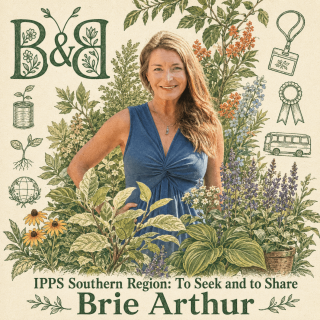
Ping Yu: (gentle music) Oh, welcome to the Blooms and Beyond podcast, a podcast that uncovers a plant history,
Download transcript (.srt)
0:00
0:10
0:13
0:15
0:17
0:28
0:36
0:47
0:49
0:53
0:58
0:59
1:03
1:05
1:07
1:10
1:13
1:16
1:19
1:25
1:27
1:34
1:44
1:46
1:55
2:02
2:11
2:21
2:23
2:33
2:35
2:43
2:48
2:52
2:56
3:04
3:11
3:12
3:15
3:18
3:20
3:20
3:21
3:33
3:43
3:46
3:47
3:49
3:53
3:56
3:58
3:59
4:01
4:05
4:07
4:09
4:11
4:15
4:25
4:29
4:37
4:47
4:49
4:52
4:53
5:02
5:05
5:06
5:11
5:19
5:25
5:28
5:38
5:49
5:49
5:57
5:59
6:04
6:15
6:16
6:22
6:32
6:39
6:50
6:52
7:00
7:07
7:17
7:23
7:29
7:39
7:40
7:50
7:52
7:57
8:00
8:12
8:20
8:27
8:33
8:35
8:41
8:51
9:00
9:11
9:21
9:29
9:38
9:48
9:51
10:02
10:12
10:23
10:25
10:35
10:38
10:49
11:00
11:06
11:15
11:25
11:36
11:46
11:48
12:00
12:05
12:07
12:18
12:21
12:28
12:39
12:44
12:45
12:51
13:01
13:08
13:15
13:25
13:25
13:30
13:41
13:46
13:55
14:05
14:07
14:11
14:18
14:19
14:29
14:33
14:40
14:50
14:54
15:04
15:14
15:24
15:30
15:40
15:42
15:51
15:53
15:56
16:01
16:03
16:10
16:20
16:22
16:27
16:35
16:45
16:56
16:59
17:03
17:14
17:24
17:31
17:41
17:43
17:53
18:00
18:11
18:13
18:23
18:29
18:39
18:44
18:54
18:59
19:05
19:08
19:11
19:18
19:28
19:33
19:37
19:41
19:46
19:56
20:01
20:12
20:22
20:32
20:40
20:50
20:55
21:05
21:16
21:23
21:25
21:35
21:39
21:50
22:01
22:09
22:16
22:26
22:37
22:38
22:48
22:56
23:06
23:16
23:19
23:25
23:35
23:45
23:53
24:04
24:14
24:19
24:30
24:33
24:43
24:47
24:57
25:00
25:05
25:12
25:23
25:26
25:33
25:41
25:51
26:01
26:03
26:13
26:16
26:27
26:27
26:32
26:43
26:46
26:49
26:55
26:57
27:09
27:14
27:24
27:33
27:37
27:46
27:54
28:04
28:05
28:06
28:08
28:13
28:23
28:28
28:36
28:42
28:46
28:57
29:07
29:16
29:17
29:23
29:25
29:36
29:47
29:56
30:04
30:15
30:18
30:24
30:32
30:43
30:45
30:56
31:06
31:09
31:19
31:28
31:38
31:44
31:46
31:56
31:58
32:08
32:10
32:11
32:13
32:14
32:22
32:31
32:32
32:36
32:41
32:49
33:00
33:11
33:12
33:14
33:21
33:27
33:36
33:44
33:54
33:55
34:03
34:14
34:16
34:26
34:34
34:45
34:55
35:01
35:05
35:15
35:24
35:34
35:41
35:52
36:02
36:05
36:12
36:13
36:22
36:24
36:26
36:36
36:39
36:43
36:43
36:44
36:51
36:59
37:01
37:12
37:14
37:26
37:36
37:38
37:49
37:51
37:58
38:04
38:09
38:12
38:13
38:23
38:27
38:36
38:39
38:47
38:58
39:03
39:07
39:18
39:28
39:36
39:47
39:47
39:51
40:02
40:08
40:12
40:14
40:20
40:28
40:34
40:44
40:46
40:56
40:57
41:07
41:08
41:18
41:23
41:28
41:35
41:46
41:51
41:59
42:01
42:06
42:13
42:16
42:19
42:23
42:30
42:41
42:46
42:56
43:07
43:14
43:18
43:23
43:27
43:37
43:40
43:47
43:53
44:03
44:13
44:14
44:21
44:29
44:36
44:45
44:50
44:57
45:06
45:10
45:21
45:24
45:25
45:34
45:42
45:49
46:00
46:03
46:08
46:10
46:18
46:29
46:30
46:31
46:40
46:44
46:44
46:54
47:06
47:08
47:09
47:11
47:12
47:19
47:28
47:34
47:40
47:50
47:51
47:52
47:54
culture, and management through the lens of science.
I'm your host Ping.
And how's everyone doing today?
I'm doing great because again, I have my, uh, one of my dear friend, uh, and, uh, insp- inspirational horticulturist, Brie Arthur
joining me today to talk about, uh, one of my favorite organization in the green industry, IPPS Southern Region.
She has been involved with the IPPS Southern Region for over a decade and will share many fun stories and opportunities that, um, IPPS
Southern Region really hold.
So I don't wanna steal any more of the center from our speaker today.
Uh, without further ado, here is my conversation with Brie Arthur.
I hope you enjoy it.
(gentle music) Hey, Brie.
Welcome to the podcast.
Uh, can you get...
(laughs) Start with the introduction?
It's been (laughs) three times.
I know you can do it differently every time.
So can you tell our audience a little bit about who you are and what you do?
Brie Arthur: I don't know that anybody's actually invited me three times on a podcast, so I'm feeling really good about myself.
Well, everybody, I'm Brie.
I go by Brie the Plant Lady, and I'm a generally not well-adjusted plant person.
And I studied horticulture way back when in the '90s at Purdue University, and that was actually where I was introduced to the International Plant
Production Society.
I attended as an undergrad, uh, an Eastern Region meeting, and it was one of those pivotal moments
for a, you know, a kid in college who didn't really know what they were doing, where I found clarity.
And I was like, "Oh, my gosh, there's all these other people that are just like me, and I don't feel like a weirdo anymore."
(laughs) And I knew I had kind of found my group, uh, in that moment, even though it took more than a decade for me to get really involved
in the organization.
Uh, but that first meeting that I went to kind of solidified my decision to study horticulture, to graduate, and to seek a job
in plant production.
Um, I do devote a lot of time and energy to it, so I, I am formally the international delegate,
and I'm also the communications director for the Southern Region.
And so I am knee-deep into all things IPPS.
So I always tell people, "If you have any problems, I'm probably the person you should talk to."
Ping Yu: And I can relate to whatever you just mentioned, the first meeting that you attended, um, decades ago.
And you know, when you s- first started, you were, like, trying to figure out who you are and what you do, and then d- with different organizations who are
different, um, groups.
But the moment that you...
I was in the meeting group with...
talking to people, I was like, "Oh, gosh.
I found my people."
Yeah, I know.
And then it's been, it's been crazy, and e- especially I think it was the, uh, the meeting in 2019, that's when I was, uh, presenting the student competition.
And then I, I remember I was there, and, uh, um, and Mengmeng, my, uh, my advisor back then, she was like,
"Oh, do you, do you see Tom Yeager?
The Yeager."
was like, "Oh, this name sounds familiar."
And then she's like, uh, "Yes, the, the Yeager."
And I was like, "The Yeager?
The one that I cite all...
that I always cite?"
And she's like, "Yes."
So I went there and, and start talking to Tom, and he's great.
He, he's really great.
A- and at the moment it was like...
I, even took a picture with him.
So I- it feels like, um, you know, l-
as a nerd as we are, and, um, meeting him is p- feels like, uh, meeting a celebrity, (laughs) you know?
A- and, uh, so I still remember all those conversations we had.
And, um, uh, Tom said one thing to me, uh, I still remember this, and he still remember this.
Um, after the communication that we had, he said, "Oh, Ping, uh, I think you will do great no
matter what you decide to do in the future."
I was like, "Holy moly, you just met me.
How do you know that?"
(laughs) And then I think last year I asked Tom, I was like, "Hey, Tom, do you remember that you said that to me?"
He's like, "Yeah, I remember.
I, and I still believe that."
I'm like, "Come on, Tom."
Brie Arthur: (laughs) I, well, first of all, Tom Yeager is the most incredible human being ever, and he's brilliant.
And of course, he saw that you were brilliant as well and going to do incredible things.
Uh, you had a whole room full of people that knew that.
I have all of my most valuable mentors started with IPPS, and I'm so grateful to have them all in my life.
I, I call, like, Dr. Fred Davies and Dr. David Creech and Tom Saunders from Saunders Brothers and Dennis Niemeyer and Tom
Yeager.
And, uh, you know, it's so funny, I, I just have this, like, Rolodex of people that just wanna keep in touch with and hear their voice and catch up
with what they're up to.
And, um, IPPS made those relationships possible.
And I've been in a lot of different professional organizations, none have had as meaningful relationships as what I've been able to forge through
IPPS.
Ping Yu: (upbeat music) But, uh, let's, let's step back a little bit.
For those who doesn't know or who, who may not be so familiar with the IPPS, can you tell, uh, our audience what is
the mission of IPPS and what is ac- So the mission, I think it's the greatest tagline of all time, and I can't take any credit for this.
Brie Arthur: (laughs) But the mission of IPPS is to seek and share plant knowledge globally, and it is a global network
of plant production professionals.
So we have seven regions around the world, including, uh, three in North America, Eastern, Western, and Southern.
We have a European region, we have a Southern Africa region, and an Australian region, and a New Zealand region.
Um, every region has its own kind of flavor and autonomy, but the, the tagline says it all.
It's to seek and share, and it's a very welcoming organization everywhere that you go.
Um, it started off way back (laughs) in 1951.
And, know, you have to think the nursery industry is actually pretty young compared to, say, like, Industrial Revolution-type
businesses.
So, you know, if you, if you come to the meetings and you hang out with some of our, you know, well-seasoned members, they still talk about when nurseries were
using cans.
They mean actual cans, like tin cans to grow plants in.
Uh, that was before plastic pots were available.
So really the nursery industry is only about maybe 75 or 80 years into its revolution,
and really the last 30 years have probably been the most, the most technological changes and advancements have occurred.
So if you think to 1951, it was difficult to even get information on rooting hormones.
Uh, you know, auxins and, and natural plant hormones were just starting to be discovered.
And how did you...
how would you communicate that without a society and without a proceedings?
And so when you get to the heart of IPPS, it was so that academics could communicate to people in the developing nursery
profession, so that they would have the information to improve, you know, their, their literally their propagation success.
So IPPS originally started off as the International Plant Propagators Society, and that was a reflection of that era where if
you were a nursery, you produced your plants from either seed, cutting, or graft, then you grew them on most often, either
in a can or in a field, and then you dug them out in the long haul to sell to the end consumer.
Well, I mean, fast-forward to 2025, and no part of that nursery structure really even exists now.
And, you know, we've, we've had a bit of an identity crisis, I would say really, really probably with the invention of the internet, in that information
has become so much more accessible.
And so in recent years, we've had a, a pretty significant update, which I'm really proud to have been a part of, where we've actually
formally changed our name, not our acronym, but our name to the International Plant Production Society to reflect the reality of producing
plants now, where you have nurseries that specialize just in propagation, and you have nurseries who buy those plants and grow them on and
finish the production cycle.
But we didn't want to be categorized as only one part of the full production methodology, which is why changing that word
from propagators to production was so valuable.
And, you know, a lot of that change has also come up with plant branding and patenting plants, and it makes sense to have
nurseries that specialize just in young plants because you can manage the royalties of these really well-bred, improved genetics,
and then it doesn't have to follow the line to every single nursery that exists.
But that, again, is just keeping in line with the modernization of the nursery industry to better meet the needs of the end consumer.
And, you know, IPPS is right there in the center, kind of basically acting as the entity that connects all of those aspects, from the university
research, to the growers, to the public gardens, to even the communicators like myself, to be able to make it so that all that information
is accessible and that we are always providing the best possible information to everyone who attends our meetings, and then also to ultimately
the people that are buying our plants.
Ping Yu: (instrumental music) So, uh, the Southern Region IPPS, uh, I would say it's the most active
and most, uh, innovative, um, group.
Uh, it's one of the groups that we are both saying.
Uh, but, um, uh, do you know-- Like, can you give us a little bit about the background, how the Southern Region, specifically, how does this,
uh, IPPS Southern Region started?
'Cause I know the Western Region started ear- a little bit earlier than Southern Region, right?
Brie Arthur: Uh, we're so fortunate to have Charlie Parkerson, uh, owner of Lancaster Farms, who had been an, uh, an IPPS member,
which at that time, originally there was just one IPPS, and it was in North America.
There...
hadn't been thought of to even have IPPS go to other parts of the world.
But, um, Charlie realized that the plant material that needs to be grown for Southern, for the Southern climate was
so vastly different than what's grown in the Northeast, the Midwest or the West Coast.
And so he very wisely saw that there was an opportunity to create a Southern Region charter.
And so we moved forward with that, with the, you know, collective group of, of some incredible industry leaders, including Sidney Meadows and, uh, Don
Shadow.
And, uh, the goal wasn't to s, you know, separate.
It was more to increase exposure and then make it so that each region could really be pretty specific about the plant material that they
were diving deep into very specifically for production cycles.
And, you know, what we do in the South, because our climate is so different, is vastly different than what would be happening in Massachusetts.
And so with that in mind, the three regions of North America were created to better suit the needs of the people living in these vastly
different geographic areas.
Now, I would say in the last
fif- fifteen years, I, I guess probably since the recession of two thousand eight, which really shook...
I mean, it shook everything.
It, it shook the green industry very specifically because so many nurseries are tied to new development, and the recession of two thousand and eight
was, you know, very much a real estate recession.
Um, you know, we had a, an incredible loss of membership, um, a loss of investments.
The society, uh, really had to regroup and, uh, it was a, it was a very treacherous time for, uh, many organizations, and many organizations
simply went out of business entirely.
Um, during that time, the Southern Region was really fortunate to hire the most incredible human being who has ever existed in our
executive secretary, Donna Foster, who really brought Southern Region out of the ashes through her ability
to keep things organized and her financial astuteness and, and, you know, for many years, Eastern Region had always,
you know, had more membership because there were more nurseries in that region.
Um, but there was a, a major transition with that recession and with bringing Donna on, and Southern Region now actually leads all of the
regions globally in membership.
We had sixty percent of our attendees in our last meeting under the age of forty,
which is...
I never thought those words would come out of my mouth.
Um, I'm, I'm above forty, so I don't count in that, (chuckles) in that age bracket.
When I first started coming to meetings, there...
You know, we, we didn't have that-- we did not have that sort of demographic.
Um, I'm also very proud to say that we're over fifty percent in female attendees, which is also a major transition from when I first
started attending these meetings.
And really, the women were generally just the wives of nursery men.
And not to say just the wives, because frankly, they were the ones likely running the businesses, uh, doing the books and keeping things in order.
But they, they would have separate tours for the women, shopping tours and things where the, the ladies weren't going to visit the nurseries.
And I'm quite relieved to see that that has changed in, in my duration of, of attending these meetings because I think if you're coming to the meeting, part
of the joy is seeing how other businesses operate.
(chuckles) And I don't necessarily need to go to a mall.
I think you and I could both really celebrate this era in which we're coming up through our careers because there are a lot more opportunities
for younger women to be able to rise in the ranks and, and, you know, get advanced degrees and, and be, and, and be in
a career, a meaningful career that weren't necessarily options for people thirty years ago.
This last meeting, we celebrated two of my favorite women, Laura Miller from Texas A&M and Dr. Sandy Wilson from University
of Florida.
Um, I was really thrilled to have two women be recognized for our two highest awards, um, because we don't have as
many women as recipients, um, in that category, but I think we, we have a bright future ahead.
And Southern Region has really led that charge, and many of the mentors, both male and female, are the reason that these opportunities exist now,
so.
Ping Yu: I mean, I was a student attending the, uh, well, participating the Charlie Parkerson's student competition, and now this year I have
my student going on the stage and doing the, uh, competition herself.
So I, I can see the linkage or the connections or the corre- um, connections from generation to generation.
'Cause I mean, for people like Sandy, like you and some- somebody like Tom,
they would say maybe two generations, three generations of people who started as a student and now they are, um, leaders in the industry or in
either in academia or in, in the nursery industry in general.
So I think that's just a magic power that, uh, IPPS Southern Region ways hold.
Brie Arthur: Well, I try and encourage everyone.
you know, no matter what
facet of horticulture you're focusing on, IPPS has something to offer you.
And I think that's what makes it so unique because there aren't a lot of organizations that bring together academics, industry,
nursery and greenhouse industry professionals, public garden professionals.
I mean, you know, we have APGA that is for public gardeners.
We have ASHS that is for research and academics.
Uh, we have, you know, nursery industry groups that are just for the nursery.
But IPPS is the one that brings all of it together, and it's that interface that I think makes it such an incredibly valuable organization
to be a part of, and also an inexpensive organization to be a part of.
It, we- we're $150 a year, and our meeting, we keep our meeting costs down thanks to generous support from sponsors.
And our, our full attendance to an annual meeting is still under $600, um, not including your travel and hotel.
But, you know, it's one of the least expensive industry four-day events that you can actually participate in, and we're very conscientious
to keep those prices down, um, so that as many people as possible can attend.
Uh, we also offer an incredible array of scholarships, and this year we gave a record-breaking 20 scholarships
to young professionals and students.
Ping Yu: (gentle music) Since you brought it up, uh, can you give, can you give us a more kind of detailed or different categories of those opportunities for
the early career, uh, students or, um, anyone within the industry, uh, who wants to be participating or, um, the
opportunities for scholarships and awards, um, that Southern Region IPPS, um, is offering?
Brie Arthur: Yes, I am happy to.
And I want to, at this moment, direct everyone to ipps.org and then click to the Southern Region, and then at the top
there is a, a, a, the scholarship option.
Um, a few years ago, after, after Coach Vince Dooley passed away from University of Georgia, uh, we created a special student scholarship in honor of him.
And, you know, Coach Dooley was obviously was very famous for being a football coach, but he took a, uh, plant ID class from Dr. Michael Dirr at University
of Georgia and became fascinated with horticulture, and I- it was basically like his second career.
I mean, he's- he developed the most remarkable garden and really became a keen plantsman, and we wanted to honor his legacy.
And so we have the Coach Vince Dooley Student Scholarship, which is available for, uh, students that are in a two or four-year program.
And this is actually one of our most generous scholarships in that it covers all of your travel, your lodging, your full registration, and you have $250
of additional spending money.
Um, in addition to that, we have Margie Jenkins' First-Time Conference Attendee Scholarship, and this was one of my initiatives.
Margie Jenkins was a, a dear friend and mentor of mine, and she passed away in early 2020.
She, similar to Coach Dooley, had actually come to horticulture in her 50s and ended up developing one of the most
important nurseries in all of Louisiana, and she actually specialized in southern native trees and shrubs, which is a category that we
could still use some more development on.
And Margie was the kindest, most generous, most thoughtful human being.
This year, we decided to celebrate the fiftieth anniversary by offering five of these scholarships, and I think that the
board and, and membership as a whole was so happy with the response that we had that we're gonna be able to continue offering the Margie Jenkins at a,
at a larger, uh, rate for really engaging people in each of the different areas that we're at each year.
Uh, you mentioned, um, the Charles Student Research Competition, which, uh, Charlie Parkerson, our, our founder of Southern Region, initiated.
And then, um, a few years ago, after Ch- uh, Dr. Charles Gilliam died, uh, professor from Auburn, we renamed it to honor both
Charlies from the Southern Region, so it's now the Charles Student Research Competition.
And then my personal favorite and the program that I'm trying to champion and extend, uh, to be even bigger than we currently offer
is the Early Career Exchange Program.
And this started as an exchange just between Southern Region and European Region, and then all the other regions in
the IPPS network started to pair up and...
I was the recipient of the exchange program in 2014, and I went to Denmark, and it completely changed my life.
I was at a crossroads in my career.
I really didn't know exactly what to do with myself.
And when IPPS selected me as that candidate, it boosted my self-esteem.
When I arrived to the European region, and everyone was so welcoming and, you know, full of advice and just helpful guidance and, and
I left there on cloud nine.
I'm still dear friends and communicate regularly with all of the people I met 11 years ago.
And if it hadn't been for that, I don't actually know where my career would have even gone at that impasse.
And I, I just feel so much gratitude for IPPS for believing in me and giving me that opportunity because it truly was the
difference between me forging my own path and building my own business or sort of reverting back to doing something that I might not have been
nearly as passionate about.
Ping Yu: And, and, and, um, it just offers so many opportunities for so many different people in students, young, young professionals who
are, um, doesn't matter with your age.
Like you said, if, if horticulture become your second career, you can still be considered as a new, uh, new person in our organization.
You can...
There are, there are still gonna be scholarships that you could apply for.
When you, when, when, when you mention, when you go through the, um, different opportunity or scholarship awards, uh, like, uh, Margie Jenkins and Dooley, I was, I
was able to
meet them before they passed away.
So I met, um, Margie Jenkins in 2019 at, um, Baton Rouge.
I was
so ins- inspired by her because she was in her 90s-ish, and she, she got a, like a walker and,
full, full of passion talking about plants and walking around.
And, then, uh, in 2020 when I saw the news that she pa- passed away, I was, I was very sad, but I was also very
happy when I know that Southern Region IPPS is offering the Margie Jenkins scholarship so that we could remember her forever in that regard.
The same goes to, um, Coach Dooley.
Um, I've met him a couple times, and, uh, we were able to tour his place when IPPS was in Athens.
Um, so it- I feel like I- I'm still pretty young, but I'm witnessing the, the history, you know.
Uh, and you never know, maybe next peop- next time there will be somebody or maybe a Brie Scholarship, Ping Scholarship.
You never know.
You, you're...
We're making the difference here.
Everybody within the indus- within the organization is making a big difference.
A- and particularly in Southern region, the board is very proactive to continue offering these opportunities.
Brie Arthur: And, you know, like I never had the opportunity to meet Vivian Monday, but it was...
she was an incredibly important character in, in Southern horticulture and one of the early female professors.
Um, and so to have her name on part of our scholarship where it's...
she's never going to be forgotten, that's the most important thing.
Ping Yu: (upbeat music) But, uh, for us, IPPS Southern Region, what do you think, what role does the annual conference
and, um, in our, um, IPPS region, uh, or IPPS Southern Region meeting play in terms of fo- uh, fostering
collaborations and innovation and, well, I guess, um, especially the in-person (laughs) interaction?
Uh, then how, how...
Can you explain that a little bit and why people need to attend it in person?
Brie Arthur: So I, have a lot of background on this.
I, uh, I was president of the Southern region, uh, for the, uh, longest time of anyone because I happened to have it during COVID.
And, um, the one silver lining of, of that, uh, horrible year was that it, it did open our opportunity
to do the North American Summit, which is really the first time in IPPS history where all three regions have come together and worked collectively.
And so when COVID hit and the meetings got canceled, we took it upon ourselves to organize the North American Summit.
And with the incredible help of Dr. Cheryl Boyer, who ran the summit, uh, she was behind the scenes doing all the technical stuff,
(lips smack) uh, that was an extremely successful venture.
I'd say the main takeaway from that, though, was that this is an organization of people.
Plants are what unite us, but it's the time we spend together that is what truly matters.
And so, though we've, you know, done other digital programming, what we always come back to is that it's, it's those four days when we're together
is when the synergy happens.
And that's why attending the meeting is so incredibly valuable, because you're gonna learn a lot from the tours, you're gonna learn a lot from the education, but you learn
even more from those discussions on the bus or those discussions at lunch or at dinner, you know, those, those casual conversations where you're interacting
with people that you may have never met before.
And it's that interchange that really becomes the thing that's of most value, that you're simply never gonna get from watching a webinar.
It's the interpersonal connection that really is what makes this particularly organization so unique and, and so valuable.
These are two, like, huge bucket lists locations to visit, and I can't imagine having gone to those places and not been with my IPPS family, doing
the thing that I love the most, looking at plants and talking about plants 24 hours a day.
Ping Yu: (laughs) I, I, I...
If you wanted to go on a tour, I mean, I would definitely go with the IPPS International Tour because you got all those wonderful places lined
up already for you.
All you need to do, just go enjoy the tour and talking to people who understand what you're talking about (laughs) instead of, like, being like a weirdo
talking to somebody about the plant.
They were like, "What?"
(laughs) You know?
Brie Arthur: Well, exactly.
I mean, you know, I laugh because I, I love my family, but they don't wanna go on the same kind of trips as me.
Um, they, they think that I take them to botanical gardens to die, (laughs) because they don't quite have the stamina.
And I...
Well, at IPPS, we might go to, like, five gardens in a day.
You know, like, we have pace (laughs) I do too.
Ping Yu: (upbeat music) Uh, so can you tell us a little bit, 'cause I know IPPS has...
Well, it, it, like you said, it's a entity that forest where it unites all different, um, perspective of inter- uh, of the industry.
Uh, but can you tell us how does IPPS, um, help bridge the gap b-between academia and, or academic and industry,
um, application?
Brie Arthur: Well, certainly the knowledge share.
Um, I, you know, I, I laugh about this, but, um,
I have an affinity for, uh, weed science and soil science.
I l- I could just, uh, so- soilless substrates, oh, my gosh, I listen to Dr. Jeb Fields and Dr. Brian Jackson all day long.
Um, and though I focus now entirely on consumer horticulture,
there's so much valuable information (laughs) that I get from those, like, highly technical presentations that I can then boil down to be able to better educate
the end consumer.
And so I'm, I'm educating a lot of recently retired people who have found horticulture to be a retirement hobby.
And so they're very misinformed, uh, specifically about herbicide use, but, you know, also just about soils and, and fertilization and,
and, you know, plant material choices.
And IPPS is the organization that keeps me well-informed, so that I can be better at my job communicating to the master
gardeners and, and at trade events to be able to tell those landscapers what they might not be able to access.
And IPPS, because we have such a vigorous education schedule every year, uh, you know, I get 22 new ideas
brought to me as a, as a result of attending that meeting, and it, it definitely strengthens my messaging and has made me better at my job.
Um, I hear this from every attendee and, you know,
I get so excited when I see,
as we did see very abundantly this year, so many young professionals, people in their early 30s and 20s attending this meeting and
going back with a fire lit underneath them because they are so excited to go back and apply the information that they just learned.
And I don't see that at every conference that I attend (laughs) but I feel it in depth every time I'm at an IPPS meeting.
And you know, we have a volunteer board, and thank you Ping for being a part of our volunteer board.
Um, but our board does such an incredible job and takes their role so seriously in not only from a sponsorship perspective, but education,
planning, looking to the future, our site chairs who do such a remarkable job in selecting not only the venues that we're visiting, but you
know, the hotels that we're actually hosting the conferences at.
And it's the most incredible volunteer organization that I've ever witnessed.
And again, I...
it's just endless gratitude to get to be a part of it, and I have yet to meet anybody who comes to the meeting and says, "Oh, I don't, I
don't wanna come back next year."
You know, that's just not how it is.
Everyone, everyone leaves ignited with some new mission and, and new information to share with the other people, you know,
their colleagues and other people that they work with.
And it's, it's that, it's that seek and share motto.
Ping Yu: Yeah.
Yeah.
And I am very happy to be on the board, and like I said, I love this organization so much, so I would love to do whatever I can to
help because this organization has lifted me up, and now it's time for me to pay it forward, and I am happy to be part of it and, and then
just move this organization forward.
I think what make, uh, the IPPS presentation a little bit unique is IPPS attendees are a mix of extension specialists
and growers.
So they can communicate directly because for me as a extension specialist, if I'm going to give a presentation to my growers,
I'll make sure my, uh, science-based information are immediately applicable, and they would understand the
moment that they hear that.
So I think that's one of the reasons why all those attendees will go back or leave the meeting with all those new information, knowledge that they can apply
right when w- when they get home.
Brie Arthur: I was t- telling Jeb Fields, uh (laughs) he, you know, he's done a lot of research on stratified substrates.
And the industry is reluctant because it requires multiple potting machines, and it's complicated.
I'm like, "Oh, but you know who can use that information?
People who have container gardens at home.
They're my people."
And so I have a whole container garden program where I'm quoting Dr. Jeb Fields' substrate research (laughs) telling all of these,
you know, master gardeners like, "Oh, you should look up, you know...
you can look up his research, you know, he was at LSU, he's at University of Florida now, and you know, to just better understand what particle size means, and
being able to hold onto that fertilizer longer."
And I would have never known about those concepts had I not been in that room listening to that program.
Um, it's, uh, you know, well, Dr. Jeremy Pickens did a great talk this year on, um, the, the, the trouble that we have with hot pots,
which is a pretty big issue as our summers aren't getting cooler.
And, you know, the advantage of white containers and a cooler root zone.
And again, that maybe has even more impact on people like me who talk to the end consumer, uh, because I can then
direct people to why, why you should be buying ornamental white pots to grow your tomatoes in to reduce sun scald and whatnot.
So (laughs) I, don't think those researchers are intending to change the lives of retired home gardeners, but they are.
Ping Yu: (Instrumental music) So, uh, where do you say the future of the IPPS Southern Region heading in the next
decade?
I mean, I personally would love to say it thrive.
Uh, a- and I think it will, but I would like to hear your opinion on the future of the IPPS Southern Region, and what
are the opportunities for, uh, innovations that we are, um,
setting us for longer success?
Brie Arthur: Well, I'm working...
I'm the chair of the Long Range Planning Committee for International, and so I'm devoting a lot of time and energy to this.
In fact, I have four documents opened on my computer right now (laughs) to, uh, start to try and hone in.
So my big goal personally for 2026 is to double our membership.
But what I would really like to see is our Southern Region membership, which is currently at two hundred and sixty-two, I'd, I'd like to see that rise to about
five hundred.
Um, I keep saying to people that if each one of us brought one new member in, we would double our membership, and it does start person
to person.
And that's the thing I keep saying, lead by example, and I'm personally trying to lead by example, and Southern Region is trying to lead IPPS
as a whole.
Um, I think our, our biggest challenge is, is just raising awareness and getting the next generation to see the value of membership.
And this has been something that, um,
once they come, they see it, but until they come, they don't understand.
And so there's not one simple solution for capturing everyone's attention.
But through, you know, outreach at trade shows and social media and YouTube and a well-coordinated website and, again, this person-to-person
interaction, I think we have an incredibly bright future.
Um, I always go back to, though, that plants are what bring us together, but people are the reason that we gather.
And
once you come to an IPPS meeting, you'll find your people, and you'll want to come every year.
Uh, one of our big advantages is that our meetings do move throughout our region every year.
So, you know, this year we were in Orlando.
In 2026, we'll be in Houston, Texas.
In 2027, we'll be in Charlottesville, Virginia.
So, you know, even if Houston is too far for you to come, perhaps Charlottesville would be more conveniently located.
And I see that as an incredible strength that we offer almost hyper-regionalism as we move from city to city every year.
And a strength of Southern Region is that we like to plan ahead.
And (laughs) you know, we're actively making plans, um, all the way until we host the next international tour in 2030, which- Yeah,
and I, I think since I joined the, uh, uh, c- board, um, I, I get to see something behind the scene, and I get to know that why
the IPPS Southern Region is surviving because we are so plan...
We, we plan so ahead, and I am a planner myself.
So I was like, "Okay, this year we're going to do this, next year, next year or the year after."
We have the goal, we have the plan, and so we just keep continue.
So I think that's one of the reasons why I have a hundred percent of faith that, uh, Southern Region IPPS is going to be better and better, uh,
especially with our next generation.
Um, we keep getting those new blood into this organization and, uh, those new ideas.
(upbeat music) Uh, with that in mind,
can you, uh, share some of the ways, um, that people can easily go follow what's going on with Southern Region IPPS, um, the
website, the social media, and, um, can you share any of those, those informations, those listeners who wants to check out more, uh, they can easily find those information?
Brie Arthur: Okay.
We are on Facebook at IPPS Southern Region.
We are on Instagram at IPPS underscore Southern underscore Region.
(laughs) We are on YouTube at IPPS Videos.
Um, if you go to our website, ipps.org, and go to the,
um, regions tab and go down to the Southern North...
I'm sorry, Southern North America, uh, you will get to our homepage.
And on there, you will easily see upcoming events and all of our recent news, which, um, gives you quick links to everything.
Scholarships are all due June 1st.
(laughs) We start-- we really open it up in January, but, uh, we really primarily start promoting the scholarships, uh, and awards, uh,
in March, but all the deadlines are June 1.
So remember that, everybody.
(laughs) But I hope everyone will, uh, give us a follow on Facebook, Instagram, and YouTube.
Um, and then, you know, join our newsletter, uh, so that you can easily stay up to date with everything that we have going on.
And, um, well, we have a lot of fun, new content to be able to share going into twenty twenty-six.
And I just wanna go ahead and end on save the date for Houston, Texas, October 18 through
22nd of 2026.
Uh, we have an incredible local site chair in, uh, Paul Winski.
He has a great team.
Um, it's already all organized and, and put together, and details are gonna be landing on the website in early 2026.
Uh, we open registration typically, uh, the end of July, and we look forward to welcoming everyone to our Houston meeting
next October.
Ping Yu: That's, that's great.
Well, um, thank you, Brie, for taking time out of your busy schedule to talk with us, um, with IPPS.
I do feel like this will be, um...
I don't know.
I feel like all those IPPS members would love this because we are trying to promote it and bring the, uh, passion and, um...
Mm, and knowledge to a larger audience, and hopefully we can, um, all together, we can build a brighter future for our industry.
Brie Arthur: Wholeheartedly agree.
The future is green.
Ping Yu: (laughs) All right.
Uh, thank you, Brie.
(outro jingle) Conversation like this only happen when you support the show.
For more information and find ways to support us, please go to bandbpod.com, bandbpod.com.
If you like what you are hearing, spread the word and share this podcast with the people you love.
Make sure you hit that subscription button and give a review for the podcast.
And as always, go check out the show notes to learn more about this topic and other topics we featured on the show at bandbpod.com.
Thank you for listening.
Till the next time.
Stay healthy and go plants.
(outro jingle)